

Youth

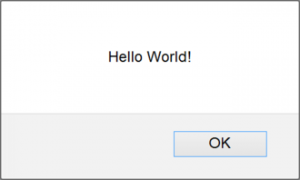
printf("Hello, world");

A "Hello World!" program, written in JavaScript
Hello, world! I’m NDItech’s new Project Manager. I’ve been with NDI for two years as an Administrative Officer focusing on technology operations support. My portfolio included tech budgeting, procurement, vendor management, and generally providing the best IT solutions to support our staff around the world. In my new capacity, I’ll have a more direct role in advising our programs and partners.

Before coming to NDI, I was a grassroots organizer for political and issue advocacy campaigns. I worked on President’s Obama 2008 and 2012 campaigns in Ohio along with state and local campaigns in Indiana. I even managed a City Council race, and we elected the city’s youngest council member in history. Before this I was a student organizer, bringing together students from across the state to lobby Indiana’s legislature for greater investments in higher education.

All of which brings me to NDItech. I'm very excited to work on programs that leverage technology to empower citizens, hold governments accountable, and strengthen democratic processes. As a Project Manager, I’ll use agile software development methods to keep our team organized and make sure we’re delivering quality work and executing on our promises.

ElecTech Abidjan - Talking Tech and Elections in Cote d'Ivoire

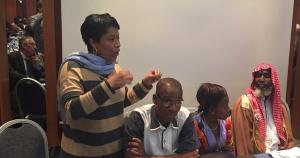
Working group discussions of Ivorian electoral challenges.

Cote d’Ivoire has an election coming up this fall. The last one didn’t go so well. As such, there is a lot of focus on - and anxiety about - the months ahead from the international community.

Last month, NDI and our partners from the Platform of Civil Society Organizations for the Observation of Elections in Cote d’Ivoire (POECI, as they are known to their friends) hosted a conference pulling together all the key players in the upcoming election: leaders from political parties, technologists, civil society, the election commission, journalism and academia. NDI has done a number of these gatherings in the past convening folks at the intersection of technology and electoral politics - we call them ElecTechs.

There was a lot of interest in the topic from the geeky political world and we ended up with quite a full house, with over 60 people in the room; POECI needed to turn away gatecrashers. Core to this whole conference (and probably all my future posts about Cote d’Ivoire) was the work by Akendewa, an Ivorian technology hub and POECI member. Akendewa is awesome; they’re a remarkable group with impressive capabilities and enthusiastic members. You’ll be hearing more about them in my next post. READ MORE »

Viral Messaging in Nigeria

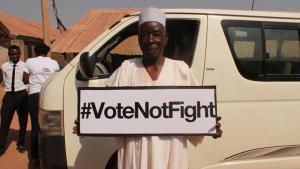
Supporter holding a #VoteNotFight sign

Nigerian non-profit Vote Not Fight has a compelling mission and a persuasive message. Their work: to empower youth to participate in Nigeria's elections and eschew election violence. Nigeria has a huge youth bulge who are disproportionately unemployed, and they are often the focus of groups looking to stir election violence for partisan political gains. READ MORE »

Tunisian Idol: Web Debates Version

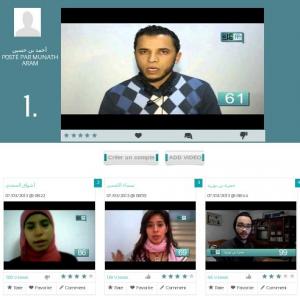
Videos from Munathara's Youth Debates

I recently wrapped up a whirlwind week in Tunis including initial planning for the upcoming election monitoring effort with our partner Mourakiboun and data managment meetings with the ruling and opposition parties. NDI's partnering with a savvy CSO named Munathara which is not just arranging one-off debates but building an entire debating culture in Tunisia.

It's pretty cool to be dealing with an organization that is doing its job so effectively you have a hard time suggesting areas for them to improve, though I'm not sure what it means for my employment prospects.

I love their approach. It's incredibly small-d democratic from beginning to end.

First, they start the process by soliciting ideas for what the next topic of debate should be. Vibrant conversations on their Facebook page are distilled into a handful of motions. These top topics are then posted as polls, and the community again weighs in to pick the debate subject for the next round.

Interested people then dive in to creating 33-second videos where they articulate the reasons they are for or against the motion. They've got a couple weeks to do so. Tunisian youth have created scores of videos for the site already. READ MORE »

Lessons from #PDF12: leaving the republic of Nerdistan

What my after-school coordinator tweets might have looked like.

I spent more time tweeting during my 48 hours at PDF12 than I had in the past six months. This is not an exaggeration; I ran the numbers. (And you can too, if you follow me, @hillaryeason. Ahem.) Part of this, of course, was due to the fact that I was at a conference that was About Technology; not only was this kind of tech widely used, it also acted as a signaling mechanism, establishing the Tweeter as someone who was engaged and tech-savvy. In that respect, at least, the demands of this job differ substantially from my last gig.

But as I was thinking about the ways in which I, as an NDI employee, actually use Twitter, I realized that I certainly could have used this kind of technology the last time I worked in this city. I ran an after-school program in a high-crime, low-income neighborhood that served 200 kids and employed 20 staff. I had next to no resources, was constantly trying to communicate information to overworked teachers who were never in the same place at the same time, and had to somehow funnel info on all of these challenges to my bosses at the public school district in order to make any kind of change. Isn't that what Twitter is for? READ MORE »

ICT and the Russian Elections: Does the Internet Matter? Highlights from Internews Panel

Navalny - prominent Russian activist

This week I attended a panel discussion hosted by Internews on the role of the Internet in the Russian elections. The first part of the panel discussed the positive impact of the Internet, while the second offered a more sobering perspective and questioned its potential for effecting real change. Panelists included Maria Gaidar, Gregory Asmolov, Maria Snegovaya, and Matt Rojansky. Some of the highlights:

  • The Internet has been a useful tool for political organizing, crowdsourcing, and engagement, particularly during recent Russian crises. During the 2010 wildfires, Gregory Asmolov co-founded Help Map, an online crowdsourcing platform used to connect people in need of shelter, food, or clothing. Alexei Navalny mobilized Russian activists via Facebook to protest the government and eventually had 30,000 people on the streets. After the protest is over, however, there is a lack of organization and a strong sense of “what's next?” Institutions can maintain the momentum, providing the next steps to effect long-term social and political change. Golos is one of those institutions, having had an active role in election monitoring since 2002, and NDItech has developed more than a few crowdsourcing projects of our own.

READ MORE »

NDI Democracy Dinner Highlights

The NDI Tech team watched Secretary Clinton's keynote at last night's Democracy Dinner with great interest and not a little institutional pride. Among other highlights, we're still blushing to hear that "freedom knows no better champion" than NDI and our sibling institutions under the National Endowment for Democracy. I've collected the best of the coverage for our loyal readers: READ MORE »

High Stakes Testing

An UNZA Student Dataentry Clerk

Another story from our efforts around the Zambia election.

We brought through a group of University of Zambia students together to select our team of data clerks for the election. There's always a lot of info that needs to get shoveled into the database from phone calls or paper sheets. College kids make a good pool to draw from for that rather tedious but indispensible task; they're smart, literate, and more likely to be experienced with computers. They're also easier to keep at work until 4 AM since it's a well-known fact that students do not actually sleep.

About 80 University of Zambia (UNZA, delightfully pronounced "ooonzah") students showed up to take a chance at working with the Civil Society Elections Coalition on the project. While there's a bit of money involved, for them there's a big draw in having this group on their CV and getting a certificate of participation from a well-regarded NGO.

The students were greeted by an intoductory speech with a stirring exhortation on the importance of elections and independent monitors. Most seemed pretty enthusiastic. After a bit of training, the test started. For the most part, though, it wasn't the students under the microscope - it was our data-management system.   READ MORE »

Syndicate content