




Mobile Technology

Election Monitoring with Enketo

Enketo

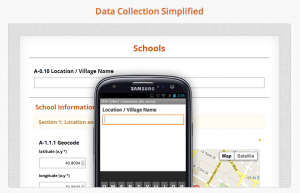
NDI has been using Enketo to help collect data overseas, as part of tablet-based observation efforts. Enketo is a great example of an extremely useful, open-source tool, supported by a great community of users and developers. We asked the experts at Enketo to talk to our readers about how their tool works and how their tool supports NGOs working in some of the most remote locations in the world.

Enketo is a versatile tool that can be used by a diverse set of organizations with data collection needs. One advantage of Enketo is that it can be used on mobile phones, tablets, or computers and only requires a modern browser. No specific operating system is required. No installation is required; one only needs a link to the form to begin collecting data. Entering data directly into a form on a device minimizes transcription errors in data collection. When devices are connected to the internet, data is gathered in real time allowing for rapid data analysis. However, Enketo can also work as an offline tool in places where internet connections may be spotty or nonexistent. Data can be uploaded when an internet connection becomes available. For situations where security is a concern, Enketo also has the option to be used as a paper survey. Using a paper copy of the survey during data collection enables faster data entry at a later time.

The National Democratic Institute presents a powerful example of how Enketo can be used to benefit communities in a variety of settings. READ MORE »

The Next Big Step for Campaigns: Taking Mobile Canvassing Technology on the Road

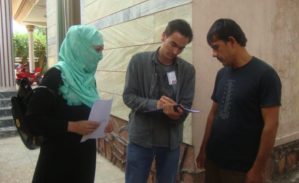
A party organizer practices voter canvassing through a door-to-door exercise. Photo credit: Munira Aziz, NDI Afghanistan

Cross-posted from NDI's DemWorks blog; written by Kate Cyr

“Data is what makes or breaks campaigns,” says Chris Doten, NDI’s senior manager for technology and innovation. “Knowing the voting population, what they like, don’t like, where you should be focusing your efforts -- that’s what drives how candidates and their staff interact with the community.”

Canvassing, an organized system of face-to-face citizen outreach, has long been used by politicians and advocacy groups to encourage constituents to vote, assess the habits and preferences of voters, and gather public opinion data. The time-honored tradition of knocking on doors remains an integral part of campaigns, though new mobile technology is starting to change the way canvassers operate on the ground.

Traditionally, field canvassers navigate constituent interviews with help from hefty question guides. The process can be difficult -- follow-up questions change based on an interviewee’s answer, and finding the right question may mean wasting time on awkward page-turning. Taking notes on constituents poses another problem, as canvassers may record things illegibly or in an incorrect shorthand.

For field organizers in advocacy and political campaigns, the logistics of sending canvassers into a community offer challenges as well. Canvassers may get lost, accidentally cover the same ground twice, slack off during a shift or falsify responses. Organizers have to devote time to creating routes, printing maps and logging canvassers’ data every day. READ MORE »

Nigeria’s Innovations

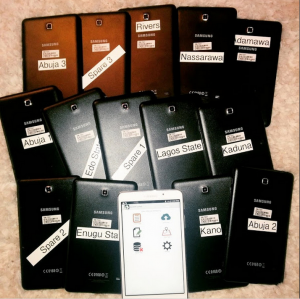
Tablets for Nigerian International Observation

Nigerians went to the polls last month to determine their next president in a tightly contested election between sitting president Goodluck Jonathan and retired Major General Muhammadu Buhari. In support of democratic processes for these elections, NDI conducted an International Election Observation Mission and supported the work of a citizen observation mission with Nigerian partner organization the Transition Monitoring Group (TMG). On election day, NDI and TMG observed Nigerian citizens’ patience and strong commitment to the democratic process, and pursued strategic initiatives to share that story through innovations in digital information collection, data visualizations, and database development.

  READ MORE »

Citizen Loop: Voter Engagement Through Mobile Feedback Loops

Voter Engagement Through Mobile Feedback Loops

We recently put forward a proposal with the folks from The Lawyers’ Committee for Civil Rights Under Law and CiviCRM to the Knight Foundation News Challenge on Elections. The competition looks for creative ways to help engage citizens, strengthen participation and educate voters.

Our proposal is entitled “Citizen Loop - Enhancing Voter Engagement Through Mobile Feedback Loops”. The concept is relatively simple: an interactive voter engagement tool that increases participation through an automated, dynamic, text message feedback system providing information and helping citizens make a plan to vote.
READ MORE »

Does "Smart" Make Sense?

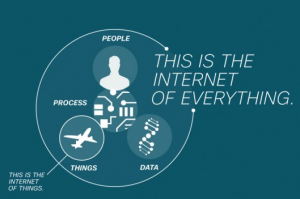
Source : Cisco Smart Cities

If you are reading this blog, I bet you have attended an event in the recent past where the new buzzy topic “Smart Cities” was discussed. I have been to several such events lately. Interestingly, each mention of ‘smart city’ I heard carried a slightly different meaning. Further, there is seldom an answer to the question, “To what end are the cities smart?”. So I decided to to clarify “smart cities” for myself. Here are some of my thoughts. READ MORE »

Zambia Elections: Scaling Local Tech Rapidly

Installing a fiber internet cable just days before the Election.

Presidential elections in Zambia were called after the death of President Michael Sata last October, and were won in January by Defense and Justice Minister Edgar Lungu of the Patriotic Front. While the second-place candidate called the election “stolen”, based on the findings of the Christian Churches Monitoring Group (CCMG), the official results as announced by the ECZ reflected the ballot casts at polling stations. Lungu was inaugurated shortly after, and the opposition are already looking toward the next round of elections in 2016.

Systematic citizen observation can be an important stabilizer in tightly contested elections. To collect the necessary evidence to be that stabilizing agent, NDI’s partner, CCMG, needed to scale it’s local technology and data systems rapidly, and also needed for them to work flawlessly.

In a data collection and internal communication exercise sufficiently large and complex, NDItech helps our partners to integrate globally state-of-the-art tools within local communications and technology infrastructure. The intermediate goals being analysis of over 20,000 messages from 800+ people, the ability to shift data collection priorities immediately, and consistent communication between decision-makers and implementers.

READ MORE »

Discussing Data: Visualizing Nigerian Pre-Election Trends

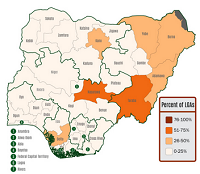
Part of NDI partner TMG's Nigerian pre-election reports, visualizations like this help highlight key trends in the data.

In the lead up to the March 2015 Nigerian elections, NDI partner, the Transition Monitoring Group (TMG), deployed a team of over 750 pre-election observers across each of the country’s local government areas (LGAs). These observers have spent the past few months collecting and submitting short message service (SMS) reports on various indicators of interest. This incoming data can be a lot to digest, so to help make some initial sense of it all, the team has turned to data visualization as a component of their analysis. Here to help explain the pre-election observation (PREO) process and its data visualization component is Ryan Dalton, Senior Program Assistant on NDI’s Nigeria team in D.C.

Q: Could you briefly explain the pre-election observation efforts in Nigeria? READ MORE »

Testing Mobile Applications for Election Monitoring

Are mobile applications the future of election monitoring?

NDItech has written extensively on the challenges and innovations of  election monitoring programs.. To understand and assess these election processes, partner groups rely on the transmission of rapid and reliable data from observers to data centers.  Getting information to the center quickly can be a challenge as observers are often located in far-off rural areas perhaps days from the capitol. As a result, most observation exercises rely on capturing information via paper forms and later using phone calls and SMS-based communication systems to transfer information. READ MORE »

NDItech - Product Development Process

© Dilbert Project Management

This is the first in a series of posts on the NDItech team’s product development process. NDI’s tech products attempt to solve specific problems for people and organizations in emerging democracies. In this post, will look at the example of DemTools development to get an insight into our development process. More about DemTools can be found here.

For the last six months, our team has been following follow the scrum methodology, which is an agile software development framework, for the development and evolution of DemTools. Agile methodology allows us to be flexible, prioritize tasks, and respond to the evolving requirements of our customers.

We wanted to share a bit about how we’re using this agile methodology for developing tech-powered political change programs here at NDI. In this post we’ll tell you how we relate to people and programs, how we think about requirements, and the timelines for our sprints, and the tools we use to glue it all together.

Customers

For the purpose of development of DemTools, the primary customers are the country teams at NDI. The country teams in turn help political parties and civil society organizations in their respective countries use and benefit from NDI’s technology efforts, such as DemTools. READ MORE »

PeaceTech Summit at USIP

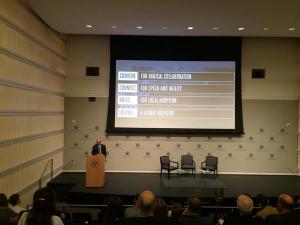
Sheldon Himelfarb introduces the new PeaceTech Lab at USIP.

I had the opportunity to attended the United States Institute of Peace’s Engineering Durable Peace Summit last week (#peacetech), an event hosted at USIP as part of their launch of the new PeaceTech Lab. Attended by individuals ranging from mechanical and software engineers to young entrepreneurs, journalists, and tech4dem folk like us, the summit hosted several dynamic panel discussions and a morning filled with quick-hitting “lightning” presentations on some of the most exciting innovations in the PeaceTech space. READ MORE »

Circumventing Twitter Restrictions

Screen Shot 2014-03-24 at 10.09.24 AM.png

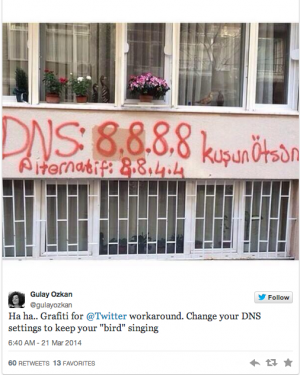
Turkey blocked Twitter. If you happen to have been on vacation over the weekend or haven’t had a chance to check out the newspaper in a few days, The Washington Post and Reuters both have good write ups on the potential political fallout of this Twitter block as well as some background information on the situation. The interesting thing, as noted in the Washington Post article, is that this “restriction” has had little effect on Twitter chatter within the country. In fact, in the aftermath of discovering that they were no longer able to access Twitter, tweets spiked to 138 percent of the normal posting rate, an ironic feat in light of the ban. This statistic begs the question, “How are Turks tweeting, and tweeting rapidly, and about a Twitter ban?”

Well, the answer is simple and not so simple. Turkey has faced routine website blocking for the better part of the last decade, most notably the 2008 restriction of access to Youtube (which was in effect for 2 years). By now, most Turks, especially the younger generation, are well acquainted with the various measures for circumventing such restrictions. In case you are not, here are a few of the ways to access Twitter in the event of a block.

  1. SMS

On March 20th, Twitter sent out a tweet instructing Turks how they could tweet via SMS on both Vodafone and Turkcell networks. SMS tweets are popular in areas with limited access to internet data, but in this case the service is proving to be multi-functional. Users can also receive tweets from friends that the user designates they would like to receive mobile tweets from. Obviously Twitter via SMS lacks much of the user experience of the broader Twitter app and website, but it still proves to be an effective work around.

Will Mobile Phone Security Always Be An Oxymoron?

RightsCon

Is true mobile phone security a lost cause? With the increasing popularity of mobile messaging applications with weak security practices, the escalation of sim card registration requirements, and the nearly antiquated legal definitions of the ways that mobile phones are used by citizens, securing mobile phone communications is a multi-faceted problem.

I’ve done mobile security trainings for a number of years now. And one of the biggest challenges that emerges with thinking through mobile security is all of the different areas where threats can emerge: the technical infrastructure of GSM networks, the personal information that’s needed to obtain a sim card, the location tracking capabilities of phones, and the list goes on.

During RightsCon, I had the opportunity to chat with the following rockstars about the current state of mobile security and what can be done to make improvements:

Alix Dunn, Creative Lead at The Engine Room  

Bryan Nunez, Technology Manager at The Guardian Project

Carly Nyst, Legal Director at Privacy International

Chris Tuckwood of The Sentinel Project

Craig Vachon, VP Corporate Development at Anchor Free

Pablo Arcuri, Chief of Party at Internews

Oktavía Jónsdóttir, Program Director at IREX

Rory Byrne, Founder and CEO at Security First

  READ MORE »

Data Centric for Low (No) Cost

Malawi - Roadside Shop - February 2014

Recent news out of Malawi has focused on the President dissolving her cabinet in the wake of arrests of several officials on suspicion of stealing state funds. The “cashgate” corruption scandal highlights the importance of accountability, and suggests an opportunity for citizens to play a key role. In this tense environment, the Malawi Electoral Support Network (MESN) plans to evaluate the conduct of the elections by the Malawi Election Commission (MEC). MESN is a network of civil society organizations working on democratic governance and elections.

An important component of that evaluation is the attention that MESN will pay to data collection and observer management. We’ve discussed many times the importance of high quality data in election monitoring, here.

Successful implementation of a common methodology includes preparing materials, staff, and tools. In order to keep costs low, and quality high, MESN has taken a simple and effective approach to communicating with their observers, and collecting and digitizing their data. Addressing key questions of cost (can users afford to keep the system running?) and capacity (does the organization understand how to administer and fix the system?) MESN is utilizing two tools in tandem: an SMS gateway called Telerivet, and Google Docs. READ MORE »

Online Organizing Platforms

@SenWarren opens #RootsCamp13

Our last RootsCamp ‘13 round-up identified free tools to maximize voice, and to collect and analyze social and mobile data. Each tool was quite specific in its purpose and execution. Beyond these, the attendees (vendors and activists alike) discussed a broader set of platforms (suites) that attempt to manage people and data in a way that allow for a variety of campaign and advocacy activities including petitions, member engagement, mobilization, etc.  As before, find a round-up of the best-of-breed at the conference below. Send any of your own suggestions, and we'll update the list.

Campaign Management

NGP VAN is the largest provider of political data management tools for progressives in the US. With it’s recent purchase of NationalField, which builds tools for managing field staff and volunteers, they provide an integrated platform of fundraising, organizing, new media, and social networking products.

NationBuilder is billed as “Political campaign software starting at $19/mo”, NationBuilder has developed an impressive set of online tools for campaigns including websites, voter databases, fundraising tools, and communications tools. Nationbuilder is looking to internationalize its platform. READ MORE »

An App That Spotlights Your Risks

Panic Button Logo

Earlier this month, I had the opportunity to participate in an event to determine how human rights defenders might approach an emergency alert mobile app given their diverse risks, and to ensure that activists first consider their risks before adopting such a tool.

The following is a summary of this event, written by Alix Dunn of the Engine Room and Libby Powell of Radar. 

How can an app developer make sure that an app doesn’t do more harm than good? For Amnesty International, that question could be one of life or death for human rights defenders using their new Panic Button app. READ MORE »

Mobile Data on the Go: How to Use FormHub and ODK in 5 Easy Steps

Data Collection Gone Mobile - Image Courtesy FormHub

One of the key components to any well run organization is an efficient process for information gathering. This can seem a daunting task for professionals working from differing locations or even transnationally. Traditionally, organizations have relied on paper forms for collecting data only to later gather the forms and enter them manually into a database for analysis. Using web-based forms allows for real-time monitoring and analysis of data. Mobile collection of data also offers the ability to collect advanced data such as GPS coordinates, images, videos, and time stamp data - all on the go and in the field.  

The best part of using mobile-forms is that you don’t have to be a programmer or statistician to utilize them. Building web-forms is a fast, uncomplicated task that can be executed by even the least tech-savvy individuals.  In order to prove this, over the last week I have been working with two tools that are increasingly popular for mobile data collection: Formhub and Open Data Kit (ODK). Below is an easy 5-step breakdown for using Formhub and ODK Collect to enhance your data collection process.

READ MORE »

Crowdsourcing Political Incidents Online

Candidate posters, Kenya Presidential Elections, March 2013.

Kenya's iHub recently released its research on crowdsourced information in the highly contested 2013 Kenya Presidential elections. The study sought to clarify the value of information collected from citizens about political incidents from online media, and to answer whether 1) “passive crowdsourcing” is viable in the Kenyan context  - passive crowdsourcing being defined as monitoring social media such as Twitter 2) determine what unique information Twitter posts provided about the election, and 3) determine the conditions in which crowdsourced information is a viable news source. As part of the report, iHub provided a useful set of recommendations and a decision-making framework for practitioners who are considering similar methodologies. 

The report provides great detail about the research methodology and data sources (Twitter, online traditional media, targeted crowdsourcing platforms like Uchaguzi, and fieldwork). Particularly impressive are the mechanisms described for capture, storage and classification of tweets and the detailed approaches to filtering for newsworthy tweets. The glossary is helpful in clarifying terminology such as that of "passive", "active" and "targeted" crowdsourcing of information from citizens. (NDI prefers the term "citizen reporting" over crowdsourcing for citizen-generated incidents data.) READ MORE »

EMOTIVE, "Mapping the Mood of a Nation"

EMOTIVE NLP Pipeline for Sparse Text Processing

It goes almost without saying that Twitter has changed the landscape of how people express and exchange their opinions online.  Currently Twitter is host to 554.75 million users with an average of 135,000 new users signing up for the service every day. It is estimated that there are 9,000 new tweets every second. What is more, Twitter users have broken the news on events before the mainstream media.  The Boston Marathon explosions, key events during the Arab Spring, and the London G20 riots as well as numerous earthquakes and other natural distasters were events where real-time updates were found on Twitter before anywhere else.  

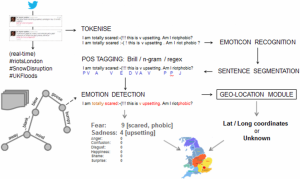
Based on this, Researchers at Loughborough University in London have developed a new system for “Extracting the Meaning Of Tears Information in a Visualization of Emotion” aptly adapted into the acronym EMOTIVE. The academics working on this project say this new program can analyze up to 2,000 tweets a second to serve as a map of real-time public sentiment. READ MORE »

ElecTech Afghanistan: Increasing Transparency and Participation

MTN welcomes visitors to Kabul International Airport

I’m recently back from Electech Afghanistan, an NDI-hosted elections and technology conference in Kabul. The event brought together senior officials from government, civil society, the private sector, and the international community to discuss applications of digital technologies to enhance transparency and participation in the election process.

Ahead of the Presidential elections in April 2014, the Afghan public lacks confidence in the government’s ability to run a credible election and this is diminishing participation and prospects for stability and democratic development. Afganistan is, of course, a supremely insecure environment with low rates of literacy throughout the population.

Participants identified ways that technology could improve participation and confidence by helping election authorities in administration, improving how political parties compete, increasing citizen’s participation, and enabling civil society organizations to observe more effectively, all while allowing journalists such as Pajhwok News to publicly share results and analysis. Discussion focused on the changing nature of political participation mediated by technology.

From Broadcast to Mobile and Social READ MORE »

Mobile Phones in International Development: Insecure and Problematic for Security and Privacy

Creative Commons Photo by flickr user gruntzooki

There is a new report by Hibah Hussein, a researcher at the New America Foundation that sharply critiques the lack of privacy and security considerations in mobiles-for-development projects. As readers of this blog know, mobile phones are proliferating as a communications and information delivery channel in international development - in health care projects, those focused on economic development and livelihoods, and also in social accountability and transparency work. We here at NDI have certainly extensively used mobile phones in systematic election monitoring, for citizen outreach and delivering civic information, and for citizens to hold their elected officials accountable. 

But, as Hussein poses, mobile phones are inherently insecure channels easily surveilled and monitored by design (after all, telcoms charge by usage and thus watch closely what you do), poorly regulated if at all with meaingful privacy protections in most developing countries, and thus inherently subject to deliberate or inadvertent privacy and security breaches. Since mobile projects in development often target the most vulnerable and marginalized populations and much of development happens in countries with poor governance all the way to outright dictatorships, this combination, Hussein argues, is a recipe for disaster.  She notes that international development projects lack privacy and security procols and guidelines and proposes a framework for them to consider in their projects. 

READ MORE »

Culture and Cost, Safety and Services: Research on Mobile Phones and Afghan Women

Photo Credit: AFP

It is no secret that the number of people using mobile phones has exploded in the last ten years. In 2002, for example, there were 49 million mobile phones in Africa; today there are more than 700 million. Mobile technology has revolutionized the way people communicate and connect to social, economic and political resources. And while there is still a considerable gender gap with regard to mobile phone ownership and usage throughout the developing world, more and more women are now using mobile phones to access social services and new economic opportunities. 

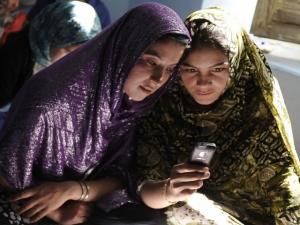
Recently, USAID released a report that supports the fact that even in hard-to reach places with strict societal norms for women, mobile phones have an impact. The Afghan Women’s Capacity Building Organization conducted a survey of 2,000 women from five major provinces to determine their access to mobile technology in Afghanistan. In the report, USAID presented some key positive findings:

  • As of late 2012, 80% of Afghan women surveyed have regular or occasional access to mobile phones.

  • Access to mobile phones is growing quickly, especially among young women.

  • 44% of women who live outside of urban areas own their own phones; 39% have access to a family member’s phone.

  • Mobile phones are becoming gateways to social and commercial services, including those related to health and education.

  • A majority of women surveyed believe that “connectivity enhances Afghan women’s lives, making them feel safer, better equipped to cope with emergencies, more independent, and more able to access the family members and friends who comprise their networks.”

  • A majority of women surveyed believe that mobile phones are essential tools.

  • Fear of technology is not a barrier.

READ MORE »

The Communications World has Changed. Have your Programs?

Use current methods of communication.

The cell phone represents the most radical transformation in communication technology for the masses since... well, who knows when. Mobiles are a BFD, and they’re everywhere. However, I’m sometimes surprised that international development professionals designing program plans don’t always recognize this new world. Based on the lived realities of citizens in their target countries, proposals for future work should always use current communication tools in their plans of reaching and working with their intended audiences.

READ MORE »

Instant Messaging on Smartphones: WhatsApp's Lack of Security

WhatsApp Logo

WhatsApp has become a very popular (read: FREE) alternative to traditional text messaging.  Over the past few years, many smartphone users have shifted from using BlackBerry Messenger and other instant messaging apps to WhatsApp. This is especially true for activists in much of the Middle East and Sub-Saharan Africa.

The growing popularity is understandable considering that this cross-platform instant messaging application for smartphones only costs $0.99 for iPhone users and nothing for other platforms.  With more than 200 million active users monthly, WhatsApp CEO Jan Koum boasted that “We’re bigger than Twitter today,” at a conference in April. According to company statistics, WhatsApp users are quite active - sending 12 billion and receiving 8 billion messages per day.   

With WhatsApp you can send free messages to friends, family, colleagues, etc. anywhere in the world.   In addition to messaging, you can create groups and exchange an unlimited number of images, video and audio media messages.  Sounds pretty great, right? READ MORE »

Mobile Phones and Violent Conflict - Is there a Connection?

Photo credit: Al Jazeera

Over the past several years, a significant body of research has examined how communication technologies are transforming social, political, and economic dynamics in societies around the world.  Much of this work has observed the positive effects of these technologies on improving civic engagement, increasing transparency, supporting free and fair elections, fostering economic development, and preventing violent conflict.  We at NDI have developed numerous programs using communication technologies to improve democracy and good governance across borders and issue areas.  

A new report, “Technology and Collective Action: The Effect of Cell Phone Coverage on Political Violence in Africa,” sheds light on the less beneficial aspects of communications technologies. 

The authors Jan H. Pierskalla and Florian M. Hollenbach chart new territory for this research in exploring the relationship between the expansion of cell phone coverage in Africa and higher levels of political violence. They write,

We contend that, in contrast to mass media, access to individual communication technology like cell phones can undermine the effects of government propaganda and, more importantly, play an integral part in overcoming other specific collective action and coordination problems inherent in insurgent violence.

According to the authors’ analysis, when cell phone coverage is present, the probability of conflict occurrence rises significantly.   As they argue, private communication technologies such as cell phones can play an integral role in overcoming collective action and coordination problems inherent in insurgent violence.  In Africa, the benefits of improved communication technologies are particularly substantial for insurgent groups.  The cheap availability of cell phones improves and increases communication among group members and allows for the tightening of networks.  These improvements are crucial for insurgents who are often spread out across vast geographical distances and who need an efficient means to coordinate actions and gather material support.  The authors hypothesize that enhanced communication facilitates in-group trust and information sharing, which are key to collective action. 

READ MORE »

Someone recovered your deleted pictures? *OH SNAP!*

Snapchat Logo

Wish there wasn't evidence of those drunken college photos? Or, pics of something that could be career-ending

Enter Snapchat, an app available on iOS and Android that allows users to take a photo, send it to a friend, and is deleted after 10 seconds. (It's so easy, even Stephen Colbert can do it). Sounds pretty great, right?

Well...

Snapchat photos appear to live "beyond the grave" in the memory of smartphones (perhaps making the Ghost logo all the more appropriate). 

Decipher Forensics recently investigated if Snapchat photos actually are deleted, or if the image and any associated metadata with such photos can be recovered. Report author  used two Android devices to send and receive Snapchat photos, and found that: READ MORE »

Syndicate content