












cdoten's blog

From Strategy to Tactics - Assessment and Planning Trips

Meeting with staff at OutBox Hub in Kampala

Writing this while sleepless on a plane back from Kampala, Uganda where I was working with NDI's field office and the civic organization group, the Citizen's Election Observers Network (CEON). This was an assessment and planning trip, so I thought I'd walk you, dear readers, through what that type of effort looks like.

NDI has been working with civil society and the parliament in Uganda for about 15 years. Along with our CEPPS partners IRI and IFES, we will be supporting a range of groups as they monitor the process of next year's election in Uganda. While NDI defined at a high level WHAT was to be done in the initial plan, there's a lot of HOW that is left to be determined. The goal of a planning trip like this is to produce a detailed plan to meet program objectives and a shared vision between key stakeholders - including the DC office, the partners, the field office team, and other collaborators - on how to make it all happen. We also need to be able to make sure that the partner's priorities and needs are matched to the appropriate tools.

Typically, on an assessment trip I attempt to analyze a range of factors that determines what is possible for a program and define the most impactful approach. Below are key considerations for an early technical assessment:

READ MORE »

Aegir Beavers

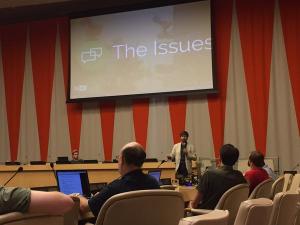
Chris Doten presenting on The Issues, hosted on Aegir
Just wrapped up a great time at #NYCcamp. NDI hasn't participated in this particular open source hootenanny previously, and I was really impressed. We’ve been long-time supporters of open source software, of course, but it’s fun to see all the people together in action. I was invited down because of our work on Aegir,  the open source platform-as-a-service (PaaS) system that we've been actively using for the last year. I had the opportunity to share some of NDI’s experiences with CiviParty in the DRC (post forthcoming!) and Ukraine and with The Issues in Colombia

There’s a lot of clever ways in which the Aegir community was advancing their project, like DevShop, a develop/test/deploy system, and integrating WordPress (!) with it; it's a really vibrant group. Aegir 3 has just dropped, which is really exciting for us. While the system has worked relatively well over all Aegir had its share of bugs and glitches that make things challenging for us, and the move to Drupal 7 is a big leap.

We're Hiring - Intern Needed!

Hello, my name is intern!
If you are a regular reader of this blog you have a pretty good idea of the wide range of technologies and techniques we get to play with supporting NDI's partner organizations abroad in 60-some countries. It's our job to improve solid democracy promotion ideas by judicious application of appropriate tech.


To work with us you have to be passionate about NDI's mission supporting and strengthening democratic institutions worldwide. A background in social activism, domestic politics, or international development is a good base. You've also gotta be in love with technology and the way it is shaping the world. If you have created a web site just to learn how to do it, or want to stay up late on a Friday night managing critical real-time data flowing in from a hotly contested a Nigerian election, or argued the real impact of internet monitoring on speech, you're our kind of person.


We can promise you a wildly varied job researching new technologies, working closely with our regional teams, playing with cool tools, writing on this blog, doing paperwork* and wrangling social media - all in the name of creating more just societies around the world.  


Oh, the position is even paid. Come apply!  


* Sorry, but it is an internship.

ElecTech Abidjan - Talking Tech and Elections in Cote d'Ivoire

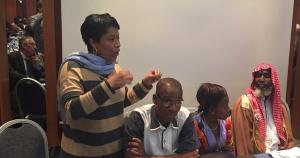
Working group discussions of Ivorian electoral challenges.

Cote d’Ivoire has an election coming up this fall. The last one didn’t go so well. As such, there is a lot of focus on - and anxiety about - the months ahead from the international community.

Last month, NDI and our partners from the Platform of Civil Society Organizations for the Observation of Elections in Cote d’Ivoire (POECI, as they are known to their friends) hosted a conference pulling together all the key players in the upcoming election: leaders from political parties, technologists, civil society, the election commission, journalism and academia. NDI has done a number of these gatherings in the past convening folks at the intersection of technology and electoral politics - we call them ElecTechs.

There was a lot of interest in the topic from the geeky political world and we ended up with quite a full house, with over 60 people in the room; POECI needed to turn away gatecrashers. Core to this whole conference (and probably all my future posts about Cote d’Ivoire) was the work by Akendewa, an Ivorian technology hub and POECI member. Akendewa is awesome; they’re a remarkable group with impressive capabilities and enthusiastic members. You’ll be hearing more about them in my next post. READ MORE »

Open Source is Easy. Community is Hard.

Get on the Bandwagon with Open Source Communities

Open source is awesome. I’m a card-carrying zealot; a vast digital public commons has been created that seems to fly in the face of basic economics. It’s one of the great achievements of the technology era.

But… 

We’re in the sustainability business here in the international development sector. Despite what I thought coming into this gig, open source is not synonymous with sustainability. If you think about it, any computer software is the antithesis of sustainability. Hardware changes. Bugs are found. Hackers figure out ways to break it, totally ruining your weekend.

Commercial providers solve that problem by paying developers to work on these problems day in, day out. It’s part of the revenue model, of course - pay for subscriptions or buy the new version when it comes out. How does open source do it? A community. (No, not that one.) Anyone has the ability to download and improve the code. “With enough eyes, all bugs are shallow” is hory wisdom from the open source world. Great; totally makes sense. But how many eyes actually do you have? How big is your community? “Putting the code on GitHub” is not a sustainability strategy.

Open source seems like the right approach for international development. Code developed belongs to the world; taxpayers fund it, and it doesn’t create a profit for anyone. Great. But who’s going to sustain it after the initial funding grant ends?

If we’re being honest with ourselves, the field of international development is littered with the wreckage of well-intentioned – and often well-executed – open source projects that have not been maintained after the initial funding ran out. READ MORE »

Leadership in the Digital Economy - 20 MPs from around the world hit DC and Silicon Valley

The NDItech Team Blog has Moved!

We're Moving!

Congrats! If you're here you've found the NDItech team's new home.

Afraid you'll miss DemWorks.org? Never fear - there's a bunch of exciting new content coming from the entire NDI family! There are initial posts from our president Ken Wollack as well as our own Christine Schoellhorn. We believe this new NDI-wide DemWorks blog will be a great chance to share a variety of stories from an individual perspective.

Meet DemTools: Closing the Geek Gap

DemTools: Open Source for Opening Politics

In the last few years, powerful, cloud-based web apps have revolutionized the way business, civic groups and governments engage with citizens. Online campaign management systems helped empower Barack Obama’s supporters to organize their communities on the way to victory; sophisticated customer relationship management (CRM) systems help businesses effectively push their wares; online communication platforms connect marketers with the populace.

Human rights and democracy advocates in the developing world have been left stranded in this leap to more effective tools. There’s a new form of digital divide that’s emerged: call it the geek gap. There are a lot of sophisticated open source software systems out there, but free software is a bit like a free puppy: the problem ain't the initial price, it’s the care and feeding over years. In low-infrastructure societies, there just aren’t a lot of people with the sophisticated systems administration skills to set up a Linux server, configure Apache, set up MySQL, and install a web application like Drupal. While there are great commercial options, struggling human rights organizations often can’t write the checks to keep those services running.

NDItech has been working on technology for development for over fifteen years, and we’ve seen the same problems manifest repeatedly. Sustainability in development is hard, and when it comes to tech it’s harder. Keeping the lights on - and web sites running - years after a project ends just doesn’t happen very often.

We're attempting to cut that Gordian knot with DemTools: the Democracy Toolkit. We’re launching with a set of four web apps that solve some of the most common problems our global network of partners have experienced. DemTools development was funded by a grant from the National Endowment for Democracy (NED). READ MORE »

We're In a People Business, Not a Computer Business

We're in a people business, not a computer business.

We recently wrapped up hiring for an intern and wow are there a lot of great candidates interested in technology for development. However, I’ve noticed a disturbing trend; I had a number of conversations with great people who were afraid they maybe would not be qualified because they “weren’t techie enough." Most of these people were women.

Tech for international development is in some ways a terrible misnomer. It’s not a tech business. It’s a people business.
Of the best ICT people I know very few of them have been professional programmers or systems and network engineers. As a matter of fact, the sorts of skills and personalities that excell in those fields may not be the ones that will help design and implement a great tech-focused program with a legislature in Zambia.

To be good at this job, you have to really enjoy tech - someone who likes to play and tinker and have fun with tools, read up on the space, keep on top of all the new stuff coming down the pike. Then you have to be creative and excited about the possibilities of using these ideas to do development in new ways to reach way more people or empower them to somehow live better.

Sometimes we’re like Tom Smykowski from Office Space; we’ve got the people skills to deal with non-technical politicians or partners, and enough technical skills to understand the jargon of developers or consultants. It’s easy for generalists to get rolled by tech vendors with flashy presentations or indecipherable paragraphs of impressive jargon; we have to both stop that and translate the general program goals a team has into an actual technical scope of work in a contract. It's a different language. Of course, in this line, sometimes it literally is a different language on top of that. READ MORE »

CyberDialogue: The Future of Internet Freedom

CyberDialogue 2014

I’m recently back from Toronto attending CyberDialogue 2014, an extraordinary gathering hosted by the University of Toronto's Munk School of Global Affairs, particularly their extraordinary CitizenLab. It's a heck of a group they pulled together - about 150 people from across academia, the NGO world, security geeks and government.
The topic for the meeting: “After Snowden, Whither Internet Freedom?”

From NDI's perspective, one of our greatest worries could be framed by dropping the H from whither: "After Snowden, will Internet Freedom Wither?”

Since Secretary Clinton put Internet Freedom on the policy agenda back in 2010, the US State Department has poured millions of dollars into promoting an open internet through funding technology to keep activists safe online and discussing the notion for a unified Internet with open access for all.

This has been a very important conversation within the United States government as well as in the world of human rights. Before the State Department Internet Freedom push, the entire discussion of rights online was framed around cyber-hyphen whatever - with language of security and control. Protect the online space by stripping away anonymity, maximizing monitoring, and generally empowering governments - including those of regimes not well known for vibrant democracy or rule of law. Rather than a monologue controlled by the Pentagon and NSA, the introduction of Internet Freedom as a frame shifted the internal conversations into a debate - and as a result, NGOs working for human rights advocates and democratic organizers had a place at the table. READ MORE »

We're Hiring! NDItech Summer Internship

We work on important stuff.

Are you a tech junkie? Do you believe that politics matters? Do you want to make the world a (ever-so-slightly) better place? Nothing particular going on this summer?

You're in luck. We're hiring.

This paid internship, available immediately, would give you an important role on our little team. If you read our blog you'll get a sense of what we're up to - there's always an interesting mix of work designing and implementing creative, appropriate tech-empowered programs across NDI's 60+ program countries. You'll be in charge of thinking how to apply cutting-edge technology to developing-world problems, testing out tools in our lab, researching what shenanigans autocrats around the world are up to, attending events, blogging right here, managing our social media platforms, setting up happy hours, and more. It only gets overwhelming sometimes.

The NDItech team sits at the intersection of three worlds. We strongly believe that empowering citizens and making government work better matters. We love technology. We care about sustainable international development. A perfect background would bridge  organzing, campaigns, or government, time overseas, and a drive to tinker with tech. We're not expecting you to be a programmer or systems administrator - we need people who can think about how to apply tech to real-world problems in some of the globe's most challenging environments.

Please check out the posting and apply!

Back to Basics - 5 Simple Security Tips

Computer-Aided Reporting Conference 2014

Last friday I was gatecrashing the Investigative Reporters and Editors Computer-Aided Reporting conference up in Baltimore. Super cool conference; I’ll write it up more generally later. I was asked to share a bit about NDI’s perspective from the field on how we work with political activists and citizen journalists to be aware of the risks they face when using the internet for organizing or communications.

It was a great crew up there - myself, Jennifer Valentino-DeVries from the Wall Street Journal and Susan McGregor from Columbia University ably moderated by Josh Meyer, a board member with the sponsoring organization.

Sometimes in life it’s hard to know what to say (a buddy’s unsuitable engagement, a breakup convo, comments on a friend’s poor artistic performance) and one of them for me are 10-minute digital security discussions. You can’t dive into the details of a complicated tool like GPG. You can scare the pants off of them, but playing dead is not a valid defense mechanism online. So we tag-teamed it. Susan started things off with a quick “how the internet works” - and therefore where you can be attacked - while Jennifer focused on some core software of use in newsrooms like Tor, password managers and Cryptocat. 

I decided to take a slightly different tack and talk about really boring stuff. Seems like a presentation winner, right? READ MORE »

That's Random: RCTs in Democracy and Governance

Random Number Generators

Data-driven decisionmaking has a lovely alliterative sound. It also makes a lot of sense in the international development world - shouldn’t we have good, solid information to help shape the choice of program activities?

Easier said than done, regrettably. Our team has been mulling about how we can use concepts from randomized control trials - RCTs - to get information on what works and what doesn’t in NDI’s tech4dem work. It is particularly important with new technologies that we’re often pushing because often there’s not enough of a track record for these shiny new tools or approaches to determine if they are effective.

In a a randomized control trial, you need five basic things: READ MORE »

Learning ADIDS - Digital Security Trainings for Grownups

I thought it was a brand of athletic shoes, but apparently I was wrong.

I was recently at a training-of-trainers with some of the best digital security experts in the business. We’re working with a crop of young trainers from around the world eager to improve their skills in teaching others the critical - and timely - topics of safety and privacy online.

We’re not children anymore. (I, at least, am nowhere close.) That means, in part, that we don’t learn in the same way that children do - and a lot of the teaching methodologies we’re brought up on don’t work well for adults. We are building out a set of digital security training materials and in the process I’ve been learning about a pedagogical approach called ADIDS. I’ve also been learning how to pronounce “pedagogical.”

ADIDS stands for Activity, Discussion, Inputs, Deepening, Synthesis. It’s a proven approach based on experimental results and sound learning principles - and entirely new to me. This may explain much of my academic career. In any case, by taking a topic and approaching it through these five lenses, one gives a broad audience of adult learners the best chance possible to absorb new, complex information.

People don’t learn everything all at once. It’s a frequent sin in digital security trainings to blast through a complicated topic, say “any questions?,” nod in satisfaction, and move on confident that the information has been absorbed and will be faithfully lived from that day forward.

With ADIDS, you’d go through a series of stages on a given topic. It also makes Death by Powerpoint refreshingly implausible. READ MORE »

Election Passport - Election Data and the Challenge of Unreliable Narrators

Data from ElectionPassport.com

I’ve recently been digging into the useful resource Election Passport - it’s a compilation of constituency-level official election results for over 80 countries around the world.

Having this basic information can be a great asset, particularly as we try and find new ways to provide context for citizens by visualizing and mapping electoral environments. One of the best ways to understand a country can be via a classic political red/blue-state style map as has been routine for elections in the United States.  I prefer more shades than just red and blue, of course, to show party preference and intensity of that preference, and it’s certainly more complicated to visualize party preference or election results for multi-party democracies.  But such historical data can provide useful context for countries where election law violation incidents might be taking place. READ MORE »

The Communications World has Changed. Have your Programs?

Use current methods of communication.

The cell phone represents the most radical transformation in communication technology for the masses since... well, who knows when. Mobiles are a BFD, and they’re everywhere. However, I’m sometimes surprised that international development professionals designing program plans don’t always recognize this new world. Based on the lived realities of citizens in their target countries, proposals for future work should always use current communication tools in their plans of reaching and working with their intended audiences.

READ MORE »

Innovation in Context

Innovation comes in many forms. And you sure hear it a lot.

Given my instinctive cringe whenever I hear the term "innovation" these days, the word may a wee bit overused. However, it the concept remains as important as ever - if organizations aren't trying new things, they're stagnating.

As a global organization working with partners in a lot of different country contexts, though, I sometimes have to check myself and remember that innovation lives in local contexts. NDI's supported scores of sophisticated election monitoring missions across the world using the Partial Vote Tabulation system, including most recently in Kenya. The methodology's a tried and true one - I'll write it up soon - and has been used for over a decade. From a global perspective, it ain't new.

In Tunisia, however, it's a massive step. (No, not this kind of step.)

Given their shiny new democracy and the fact they've only had one real fair election in generations, any form of election monitoring is new. Moving to one that requires thousands of citizens across the country to work in concert with an extraordinary degree of accuracy is a big deal. READ MORE »

We're Hiring! Part-time Writer

Digital Writing

We're hunting a savvy and passionate student writer and thinker to blog for the NDItech team.

The position is over 3 months for between 10-20 hours per week, and you don't have to be based in DC. You'll write concise pieces that address hot topics in the technology and democracy arena, as well as highlighting tech-focused programs conducted by NDI. We also want you to have a hand in our social media outreach, and then measure your impact via analytics.

You need to...

  • Be a good, fast writer
  • Rock at creating content for the web
  • Have social media skills
  • Be passionate about the intersection of democracy and technology
  • Have experience with a content management system like Drupal
  • Be interested in tracking impact with analytics
  • Want to learn about tech in development

We're flexible on the hours you work, as long as you can create engaging content.

Think you fill the bill? Apply through http://www.ndi.org/current_openings -> Internships  -> Part Time Blogger/Writer Intern -> Information and Communication Technology. Also feel free to email [email protected]. Have a blog post or two ready as an example.

Tunisian Idol: Web Debates Version

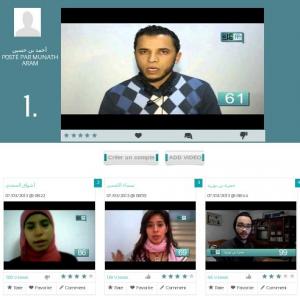
Videos from Munathara's Youth Debates

I recently wrapped up a whirlwind week in Tunis including initial planning for the upcoming election monitoring effort with our partner Mourakiboun and data managment meetings with the ruling and opposition parties. NDI's partnering with a savvy CSO named Munathara which is not just arranging one-off debates but building an entire debating culture in Tunisia.

It's pretty cool to be dealing with an organization that is doing its job so effectively you have a hard time suggesting areas for them to improve, though I'm not sure what it means for my employment prospects.

I love their approach. It's incredibly small-d democratic from beginning to end.

First, they start the process by soliciting ideas for what the next topic of debate should be. Vibrant conversations on their Facebook page are distilled into a handful of motions. These top topics are then posted as polls, and the community again weighs in to pick the debate subject for the next round.

Interested people then dive in to creating 33-second videos where they articulate the reasons they are for or against the motion. They've got a couple weeks to do so. Tunisian youth have created scores of videos for the site already. READ MORE »

Building a Better Digital Security Training

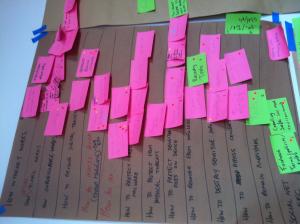
Many digital security training module concepts.

I'm holed up with a bunch of geeks for a week talking about the art of digital security training. Since I've been with NDI, keeping people safe on the intertubes has gone from an afterthought in the international development space to something that scores of organizations are doing to support activists, journalists, rights defenders and democracy advocates.

With regimes getting nastier online by the day and even the head of the world's biggest intelligence service vulnerable to government cyber-snooping, there's a huge need for increasing the number of people able to share lessons in this area; funders, too have been shoveling heaps of money into this space.  We desperately need to grow the pools of well-taught trainers deeply experienced in digital security for people in the most sensitive political spaces,. There's been some well-intentioned but not well-educated trainers who can do more harm than good struggling to fill this void, leaving a swath of pupils who feel safer than they should in their wake.

We're trying to fill in this gap.

A new program being led by Internews and NDItech with support from some of the top international digital security teams is working to create a gold-standard curriculum of teaching modules running the gamut of topics that a trainer may have to teach. READ MORE »

Sustainability (in ICT4D) is Overrated

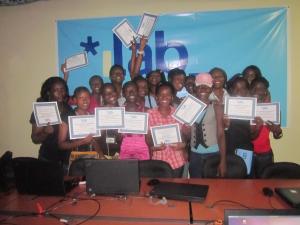
Women trained on computing fundamentals at iLab Liberia.

I started my day yesterday (deplorably early) at a (very engaging) discussion on the role of technology hubs in international development. It was the most recent Tech Salon sponsored by Inveneo.

I’m a big fanboi of these tech hubs (as you already know) so was happy to join the conversation. While the discussion had a habit of wandering away into a thicket of mobile apps monetization challenges, it did clarify some thinking on my part.

Namely, ICT4D (tech for development for the uninitiated) sustainability can be a red herring.

Of course in the development biz I believe successful projects are the ones that continue on through lo the many years. However, if one is too doctrinaire on this point, incredibly valuable ideas may never see the light of day. iHub Nairobi came into being on the back of a bunch of Ushahidi money, and served very usefully as a home for projects dedicated to social good without being able to cover their costs for years.

The perfect example is iLab Liberia. That organization has the second fastest internet connection in Monrovia (number 1: NDI field office) and they have to pay through the nose for it, to the tune of tens of thousands of dollars a month. The need to cover those costs - let alone staff, computers, space, electricity - would condemn the project to failure. It’s completely unimaginable that profits from developed applications or user fees could cover those costs for years. They do a good job bringing in additional money via consulting (NDI’s a satisfied customer) but that can only go so far. READ MORE »

Liveblogging #GhanaDecides Day 2: The Revenge

CODEO Dataclerks, Ghana 2012

Goooood morning #Ghana

In a bit of a personal tradition, I'm liveblogging elements from today's Groundhog Day-style election Part the Second.

Updates are added in reverse cronological order.

Epilogue READ MORE »

If an Election Falls in a Forest and No One Hears It...

A Digital World Tree

NDI works with the best citizen election monitoring teams in the world. As we've described in the past our partners are really good at getting the information in quickly. The question then becomes what you do with it - and traditional methods need to change here, too. I'm currently working in Ghana with CODEO, the Coalition of Domestic Election Observers on just such a project.

These days, standard press conferences are not enough. Getting excellent data quickly is useless if you can't also turn it around and share it with the people equally rapidly. It's the tree-falling-in-the-forest problem: if your organization has the best information in the world but no one knows has heard it, what's it all for?

NDI's election observation partners often know better what's taking place on the big day than the electoral authorities themselves. There's an irony there: at the very moment when the eyes of a country and the world are focused on a particular election these partner organizations know exactly what's going on - and have traditionally had no ability to share it.

Well, that's now changing.

The most important information and analysis requires the complete picture to draw the most wide-ranging and significant conclusions possible, and that ain't happening until all the data is in. But the individual snippets of information still have value. READ MORE »

iLove iLab

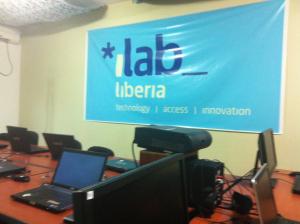
iLab Liberia

Liberia has one of the least-developed communication infrastructures in the world. Literacy is at roughly 60%.  The nation is still recovering from one of the most brutal civil wars in recent history. All in all, not perhaps where one would expect to find a burgeoning group of tech innovators and wanna-be geeks. However, walk in the door of iLab Liberia and you'll find just that.

Kate Cummings, iLab's executive director, came to NDI last week to share some of her experiences working in Liberia. iLab is one of the tech hubs that have sprung up across Africa following on the model from granddaddy iHub Nairobi, epicenter of Kenya's digital development. One of the most exciting concepts I've seen in the world of development in recent years, these tech hubs provide a supportive environment for the experienced to teach the novice, for ideas to percolate, for business ideas to bloom, and for new tools to be shared. iHub, however, has an unfair advantage - they have an in-space coffee shop with amazing Kenyan coffee. READ MORE »

Digital Connections in the Favelas of Brazil

Participatory Budgeting Mobile Voting Station. Photo from Tiago Peixoto.

So you wanna reach hundreds of thousands of people in the favelas of Brazil to join in a public process. to determine budget priorities.  How to do it?

We’re talking about folks who may not have touched a data-connected mobile device nor a computer. You’d probably say that an internet-only strategy of capturing input would be doomed to failure and would disenfranchise the poor. Well, at least I would have.

The town of Belo Horizonte and the state of Rio Grande do Sul, both in Brazil, proved me wrong.

In NDI’s second Tech4Democracy brown-bag discussion, Tiago Peixoto of the ICT4Gov Program of the World Bank shared the tale of these communities and other participatory budgeting case studies. (For more information on the concept, check out an introductory blog post from Tiago.) During an engaging hour-long presentation, Tiago spun the story. READ MORE »

Syndicate content