



nditech's blog

Election Monitoring with Enketo

Enketo

NDI has been using Enketo to help collect data overseas, as part of tablet-based observation efforts. Enketo is a great example of an extremely useful, open-source tool, supported by a great community of users and developers. We asked the experts at Enketo to talk to our readers about how their tool works and how their tool supports NGOs working in some of the most remote locations in the world.

Enketo is a versatile tool that can be used by a diverse set of organizations with data collection needs. One advantage of Enketo is that it can be used on mobile phones, tablets, or computers and only requires a modern browser. No specific operating system is required. No installation is required; one only needs a link to the form to begin collecting data. Entering data directly into a form on a device minimizes transcription errors in data collection. When devices are connected to the internet, data is gathered in real time allowing for rapid data analysis. However, Enketo can also work as an offline tool in places where internet connections may be spotty or nonexistent. Data can be uploaded when an internet connection becomes available. For situations where security is a concern, Enketo also has the option to be used as a paper survey. Using a paper copy of the survey during data collection enables faster data entry at a later time.

The National Democratic Institute presents a powerful example of how Enketo can be used to benefit communities in a variety of settings. READ MORE »

The Next Big Step for Campaigns: Taking Mobile Canvassing Technology on the Road

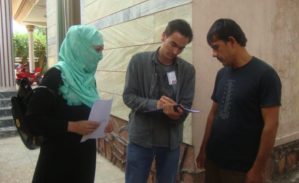
A party organizer practices voter canvassing through a door-to-door exercise. Photo credit: Munira Aziz, NDI Afghanistan

Cross-posted from NDI's DemWorks blog; written by Kate Cyr

“Data is what makes or breaks campaigns,” says Chris Doten, NDI’s senior manager for technology and innovation. “Knowing the voting population, what they like, don’t like, where you should be focusing your efforts -- that’s what drives how candidates and their staff interact with the community.”

Canvassing, an organized system of face-to-face citizen outreach, has long been used by politicians and advocacy groups to encourage constituents to vote, assess the habits and preferences of voters, and gather public opinion data. The time-honored tradition of knocking on doors remains an integral part of campaigns, though new mobile technology is starting to change the way canvassers operate on the ground.

Traditionally, field canvassers navigate constituent interviews with help from hefty question guides. The process can be difficult -- follow-up questions change based on an interviewee’s answer, and finding the right question may mean wasting time on awkward page-turning. Taking notes on constituents poses another problem, as canvassers may record things illegibly or in an incorrect shorthand.

For field organizers in advocacy and political campaigns, the logistics of sending canvassers into a community offer challenges as well. Canvassers may get lost, accidentally cover the same ground twice, slack off during a shift or falsify responses. Organizers have to devote time to creating routes, printing maps and logging canvassers’ data every day. READ MORE »

How the Tech World is Responding to the Earthquake in Nepal

in
A devastating 7.8 magnitude earthquake hit Nepal last week

In the wake of the devastating earthquake that hit Nepal last week, many individuals, groups, organizations, and companies have stepped up to provide assistance. Below are a few highlights of tech-related strategies and efforts to improve and expedite the response and ease the suffering of those affected by this natural disaster and others in the future.

  • Apple restarts iTunes Red Cross donations to benefit Nepal earthquake recovery

  • Microsoft responds to Nepal earthquake with free Skype calls

  • Another way to help humanitarian efforts in Nepal: Start Mapping

  • OpenStreetMap allows contributors from around the world to support humanitarian orgs by digitizing data from satellite imagery

  • Google opens its Person Finder tool to aid earthquake relief efforts in Nepal

  • How Facebook and other social media are/can be effective tools for life and death emergencies like the earthquake in Nepal

  • Timeline infographic on how the world is searching about the ‘Helping Nepal’

News and Notes Roundup: March 30

in
This is what the entire UNIVAC unit looked like

It’s Monday, and that means we are here with our weekly tech roundup. March is coming to an end and the weather forecast is finally looking better. As we all prepare for the Final Four matches in college basketball and mourn our inevitably failing brackets, be sure to check out this week’s edition of the News and Notes Roundup. This week, we have reports from the UN and the World Bank on the importance of ICT in developing countries as well as a preview of the new Samsung S6 Edge smartphone.

This day in tech history, the first commercial computer, UNIVAC, was released in 1951. UNIVAC was originally used by US Census Bureau to hold all of the information the census requires. This is far from similar to the computers any of us use today. UNIVAC was a massive computer that weighs about 29,000 lbs and has a size that occupied 35.5 square meters, which caused its sale to be restricted to huge corporations and the US government. And the cost was just as big; individual units were sold at $1.3 million.

Popular Tech News: READ MORE »

Citizen Loop: Voter Engagement Through Mobile Feedback Loops

Voter Engagement Through Mobile Feedback Loops

We recently put forward a proposal with the folks from The Lawyers’ Committee for Civil Rights Under Law and CiviCRM to the Knight Foundation News Challenge on Elections. The competition looks for creative ways to help engage citizens, strengthen participation and educate voters.

Our proposal is entitled “Citizen Loop - Enhancing Voter Engagement Through Mobile Feedback Loops”. The concept is relatively simple: an interactive voter engagement tool that increases participation through an automated, dynamic, text message feedback system providing information and helping citizens make a plan to vote.
READ MORE »

A Renewed Vision: DemTools 2.0

A Renewed Vision: DemTools 2.0

DemTools are a set of open-source solutions developed by NDI’s Technology for Democracy team (NDItech) to address some of democracy’s most common problems. The tools, which were released in August to NDI partners, the development community and general public, focus on scalability – providing advanced technologies to make their work more effective, while reducing maintenance and sustainability burdens. NDI recently received a renewed National Endowment for Democracy (NED) grant for the continued development and expansion of DemTools. In deciding where and how to allocate these funds, we reviewed current features and updated our roadmap for product development and version release timelines. We determined that better support, enhanced multilingual capacity and increased usability were priorities across all of the tools.

Product roadmaps exist at the nexus of supply and demand. DemTools are developed on limited resources, but meet myriad needs. For these tools to remain sustainable yet relevant, we need to navigate carefully a winding road, ignoring diversions and prioritizing needs that provide the most value to our users.

To keep our tools nimble and ensure cost effectiveness, NDItech worked to fine tune our product vision: Who are we developing for? What needs are the tools addressing? What value do they bring to our programs and partners? For weeks, our team had poster boards with sticky notes floating around, stuck to walls and taped to the side of cabinets. READ MORE »

Zambia Elections: Using Facebook for Targeted Messages

A special guest post by Phil Brondyke (@brondyke) from NDI’s Elections team.

Presenting the analysis of election day observation to the right audience is a critical component of citizen monitoring organizations’ outreach strategies, and one of which NDI has provided technical assistance to partners on for decades. In some countries where NDI works, Facebook has become synonymous with the Internet, and the use of Facebook for election day outreach has become an increasingly useful tool for communicating with certain audiences.

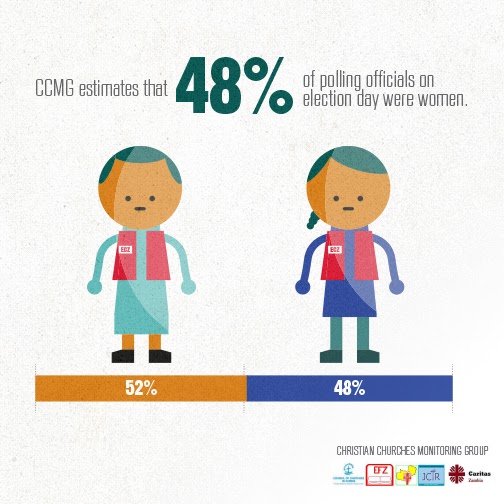
During January’s snap presidential election in Zambia, the Christian Churches Monitoring Group (CCMG) was able to combine Facebook-optimized infographics that showed the findings of their PVT with targeted advertising campaigns to broaden their organization’s digital footprint in a very narrow timeframe.

Facebook estimates that there are roughly 900 thousand users in Zambia (for reference, there are about 4.2 million in Kenya and around 900 thousand in Zimbabwe) so the potential audience was limited, but is disproportionately under thirty five years old (76%). This is a critical demographic for communicating competitive election information. By contrast, two of the three largest newspapers have print circulations of 29,000 and 25,000, while the largest is estimated at 40,000, according to EISA.

READ MORE »

Towards a Standard Open Decisions API

Mapping of APIs and data formats and tools are currently being used

Editor’s Note: Cross-posted from NDI's OpeningParliament blog.

At this year’s Open Knowledge Festival -- a biennial gathering of open government advocates -- there was considerable interest in moving toward greater standardization of APIs (application programming interface) relating to government decision-making processes. Web APIs help promote an open architecture for sharing content and data between communities and applications. Standardization of APIs for government decision-making data would allow tools built by civic innovators or governments to analyze or visualize data about government decision-making to be used across multiple jurisdictions, without needing to re-program the tool to accommodate differing data formats or ways of accessing the data.

Most government decision-making procedures involve similar processes (meetings, requests for public comment, etc.), decision-points (committee hearings, committee meetings, plenary sessions, etc.) and supporting documentation (agendas, draft legislation, information on voting records, etc.). Standardizing the ways that these types of information are structured allows tools for visualizing data about open government decision-making to be used across jurisdictions, as well as facilitating comparison of data and information.

To discuss the state of play with respect to open government decision-making APIs, Open Knowledge Finland, Open North, and the National Democratic Institute organized a session at the Open Knowledge Festival 2014 in Berlin to explore the possibilities for moving toward a global standard for APIs that deal with data on government decision-making.

Ongoing Efforts READ MORE »

Technology Strengthens Citizens Watchdog Role in Indonesian Elections

A citizen observer photographs the C1 form in a polling station in Jakarta

Editor’s Note: This is a guest blog post by David Caragliano, Program Manager on NDI's Asia team.

In any democracy, a close election tests the durability of the country’s political institutions and rule of law – witness the U.S. presidential election of 2000 and Bush v. Gore. By many accounts, after Indonesia’s contentious July 9 presidential election, the institutions of the world’s third largest democracy appear to be holding up well. Joko Widodo (familiarly referred to as “Jokowi”), a candidate of relatively humble origins, defeated former special forces general Prabowo Subianto by a six percentage point-margin of victory. Prabowo has alleged “massive and systematic fraud” and has filed a lawsuit disputing the results in the country’s Constitutional Court.

Prabowo will likely argue for a recount in certain electoral districts (we will wait to see whether his lawyers invoke “hanging chads”). But, through an amalgam of established practices and improvizations, Indonesia’s electoral agencies and civil society have relied upon a number of tactics – leveraging social media, online crowd-sourcing and data aggregation – to help ensure an inclusive, accountable, and transparent process. READ MORE »

Join the team!

Mobile Phone Users

We want you!

Forced to choose between your love of politics, international development and your love of tech? We’ve got the position for you! The NDITech team is hiring a Senior Program Assistant to join our team

The successful candidate will work across NDI's programs to create and mainstream innovative project approaches through technology, from proposal development to project implementation. You'll help to keep our team's engines running by attracting more funding opportunities and helping to manage the day-to-day operations. You'll also work frequently with software engineers and NDI staff in DC and in the 60+ offices worldwide to strengthen NDI's democracy programs.

We also get time to think, write and discuss this exciting field with our counterparts in DC and around the world. For the right candidate, there's field work involved, assessing what tech is the right fit for new programs or helping with on-the-ground implementation.

Want to learn more? Check out the job description and apply here. 

New NDITech Friends in the Northern Virginia Tech Community

NVTC

NDI has been reaching out to the tech community over the last few years to explore mutually beneficial ways to work together. You may recall our conference in Silicon Valley last year, billed Governing Democratically in a Tech-Empowered World. Next week we're venturing south to engage the tech community in northern Virginia with our new friends from the NVTC - the Northern Virginia Technology Council. 
 
NDI and the International Committee of the NVTC are co-hosting a lunch discussion that hits on a couple of the key themes we're working on surrounding technology and democracy these days - digital security and civic innovation. The first panel, Digital Security to Protect Human Rights and Democracy Activists, will feature former NDItech star Ian Schuler and Amie Stepanovich - Senior Policy Counsel from Access. The panel will be moderated by Mohamed Reda, Chair of the International Committee of NVTC. Following a nice lunch the second panel - Technology, Civic Innovation and Democracy Support - will be moderated by Alex Howard and feature Megan Ryskamp Partnerships from Google; Amy Ngai Director of Partnerships and Training from the Sunlight Foundation; and our own Scott Hubli - Director of Governance from NDI.
 

A Global First: A permanent hacker space in the Brazilian Congress

Hacking Congress. Photo credit: Brazilian Chamber of Deputies.

On December 17, the presidency of the Brazilian Chamber of Deputies passed a resolution that creates a permanent Laboratório Ráquer or “Hacker Lab” inside the Chamber — a global first. The full text of the resolution in Portuguese is here. The resolution mandates the creation of a physical space at the Chamber that is “open for access and use by any citizen, especially programmers and software developers, members of parliament and other public workers, where they can utilize public data in a collaborative fashion for actions that enhance citizenship.”

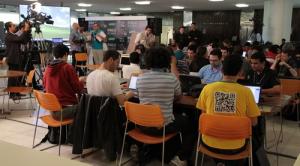
The idea was born out of a week-long, hackathon (or “hacker marathon”) event hosted by the Chamber of Deputies in November, with the goal of using technology to enhance the transparency of legislative work and increase citizen understanding of the legislative process. More than 40 software developers and designers worked to create 22 applications for computers and mobile devices. The applications were voted on and the top three awarded prizes.

The winner was Meu Congress, a website that allows citizens to track the activities of their elected representatives, and monitor their expenses. Runner-ups included Monitora, Brasil!, an Android application that allows users to track proposed bills, attendance and the Twitter feeds of members; and Deliberatório, an online card game that simulates the deliberation of bills in the Chamber of Deputies.

The hackathon engaged the software developers directly with members and staff of the Chamber of Deputies, including the Chamber’s President, Henrique Eduardo Alves. Hackathon organizer Pedro Markun of Transparencia Hacker made a formal proposal to the President of the Chamber for a permanent outpost, where, as Markun said in an email, “we could hack from inside the leviathan’s belly.” The Chamber’s Director-General has established nine staff positions for the Hacker Lab under the leadership of the Cristiano Ferri Faria, who spoke with me about the new project.

READ MORE »

Please Join Us! Civic Innovators in Conversation, Wednesday, Dec 11 at NDI

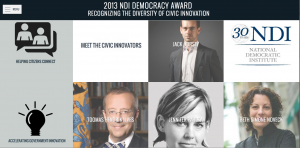
NDI honors Civic Innovators

Please join NDI and the OpenGov Hub for a conversation with recipients of NDI's 2013 Democracy Award this Wednesday, December 11 at 12-2 pm in NDI's office in Washington. NDI is honoring this year a stellar group of Civic Innovators from around the world. We wanted to recognize an emerging class of creative and entrepreneurial individuals who are using technology to help advance and improve democracy in the digital age.

We're pleased to feature a number of the award winners in a conversation about the nature of civic innovation and its implications for democracy around the world and hope you can join us!  Please register here  READ MORE »

Beyond Repair? Normative Change in Freedom Online

Norms are shifting on the Internet. Don't get left behind. (image by  nettmonkey)

Cyberspace and all communications associated with the Internet was once idealized as a free and open space in which communications could flow back and forth at liberty. This idea has slowly changed in the last 25 years and we are now seeing the Internet and cyberspace as a “Fierce Domain” in which states engage in hostile actions against one another and increasingly against their own citizens. We wondered what normative changes have occurred over the last 15 years in cyberspace and what the implications of this change has been on democrats around the world. 

Jeffrey Legro’s definition of norms as “collective understandings of the proper behavior of actors” is helpful to illustrate how norms have evolved in cyberspace. So then, what are the specific norms we would like to see in cyberspace as a democracy support organization? There are currently very clear trends of norms that we wish we didn’t see. 
 
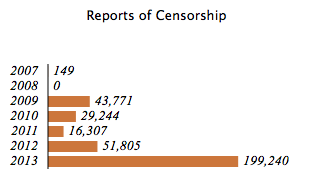
First we see a significant inrease in offensive and defensive state-level cyber capabilities and a growth in state censorship and surveillance. The data globally, as illustrated through sample data taken from censorship monitoring projects such as the Berkman Center’s Herdict Project (Image Right), illustrate an increase in reports of online censorship. Although this data is based on citizen reporting and may not also be state-generated, the enormity of reports of censorship is staggering. 
 
Along with censorship comes its closely related counterpart, surveillance, and the reports of individuals being surveilled in their online activities is only increasing. Furthermore as indicated by experts in tracking censorship and surveillance such as Ronald Deibert at the Munk School of Global Affairs’ CitizenLab surveillance is getting worse. Globally we almost certainly passed the statet when only a few states were using the Internet as a means of censorship and surveillance against their own citizens. States are increasingly socializing, demonstrating, and institutionalizing censoring and surveillance behavior.

Come see Tech4Dem Innovations (and #fails)

Social Media Week DC

NDI is excited to host a series of events during Social Media Week DC

  • Tuesday, Feb. 19 from 4 pm - 5:30 pm: Women, Tech and Democracy - The Next Frontier

Tech plays a crucial role in this work but women are lag behind in access, use, and ability to afford to communicate online and via mobile devices. A panel of high-powered women will explore what we know about how women participate online, what we know about the effective use of tech in women’s political participation, and where we are still falling short.

While this event is full, we will be streaming the event online (stay tuned for updates) and you can follow the hashtag #smwwomentech4dem READ MORE »

We Want You!

Come join us!

Torn between your love of politics and your love of tech? Fret no more!

The NDITech team is hiring a Senior Program Officer to join our crew. 

The Senior Program Officer will work across NDI's programs to create and mainstream innovative project approaches through technology, from proposal development to project implementation. You'll help to keep our team's engines running by attracting more funding opportunities and helping to manage the day-to-day operations of our team. You'll also work frequently with our team, software engineers internally and externally, and other NDI staff in DC and in the 60+ offices worldwide to accomplish NDI's democracy programs, with your passport potentially getting some good use to help with on-the-ground implementation.

Want to learn more? Check out the job description and apply at http://www.ndi.org/current_openings, --> "4. Technology" and "Senior Program Officer".

Hiring Friday! #tech4dem Jobs Galore!

There is no democracy unless we all sing

It's Hiring Friday in the #tech4dem field! Here is a line-up of jobs and internships of interest to those working on tech-for-democracy projects.

  • Making democracy work and working for democracy with tech - here at NDI. @NDITech has openings for software developers and interns. Intern position information is here - the deadline is approaching!  We also have several software engineering positions open.  All involve working with dynamic project teams to conceptualize, design and implement technology into NDI’s democracy assistance programs around the world. International travel may be required.  Go to http://www.ndi.org/current_openings --> Technology to see the current openings.
  • Human Rights First is looking for a full-time web developer to help maintain and extend Drupal website, maintain the existing Wordpress website and deploy digital advocacy products through Salsa. The salary and benefits for this position are competitive, the team is collaborative and creative, and the position is located in the NY office. Details here
  • New America Foundation - The Open Internet Tools Project (OpenITP) seeks a well-organized, persistent researcher with investigative skills for a part-time consulting contract lasting approximately 4 months, to research and report on the state of circumvention technology usage in Asia, concentrating on mainland China. Pay will be based on experience. The research will likely involve travel to Asia, with expenses reimbursed. More information here. 
  • The Citizen Lab in Toronto is seeking a Software Developer to engage in software development to support a range of research projects at the intersection of information communications technologies, global security, and human rights. You will work with the Citizen Lab team to develop existing and new projects, assisting with all phases of software development from requirements gathering and implementation to testing and deployment. Full details here. 

Tech4Dem Tuesdays in DC - Join Us (and see TAILS, the Safety and Anonymity Tool)

If you are in Washington, DC, join us for the first-ever Tech4Dem Tuesday Happy Hour this coming Tuesday, August 28 at RFD. Think beer, open government, tech for parliamentary monitoring, elections, good governance - all things tech for democracy worldwide. Laugh, cry, and drink with your fellow DCers who work to make democracy work with tech the world over.

Who: If you're working on or interested in tech for democracy, fair elections, good governance, a free media, and citizen voice, come on over. We'll feature several interesting projects each month (informally, over the din of the bar), so if you have cool stuff to show off, bring it!  We'll be bringing TAILS, the tool that gives you privacy for everyone anywhere. 

Where: RFD Bar
810 7th Street Northwest
Washington, DC 20001

When: Tech4Dem Tuesday, of course - August 28, 5:30pm on.

Why: Because anyone who works in this field knows that we love to socialize, talk shop, and share ideas.  And hey, as they say, working for democracy and making democracy work never ends, but it's better with a beer.

RSVP below so that we have an idea of headcount and can warn the bar. We may just spring for your first round if you let us know you're coming!

RSVP: http://tech4demtuesdays.eventbrite.com READ MORE »

How to Become an NDItech Intern in 4 Easy Steps

If we wanted a coffee-wala we wouldn't offer hourly compensation.
  1. Read this post in its entirety
  2. Go to ndi.org/current_openings, click on Internships, and read the JD entitled "Intern/Project Assistant: ICT Programs"
  3. Apply to the ICT Intern position with your shiny, impressive resume (don't forget your grammatically correct cover letter)
  4. Do a celebratory dance and wait for us to call you.

For bonus points, you could write us a love song and sing it to us in a YouTube video, create a meme around digital security, or solve the Traveling Salesman problem. Actually if you solve the Traveling Salesman problem you should probably go ahead and apply at the NSA.

Working on the ICT team isn't like your internship on the Hill. Yeah, there's paper to be pushed and research to be done*, but ICT interns get to work on some really cool stuff, not to mention attending events and posting on this blog. And the team is pretty awesome, too: we're a knowledgeable group from diverse backgrounds, all passionate about technology and democracy. If you like all things international, tech, and/or activism, our team is probably the right place for you.

Oh, and did I mention it's a PAID internship?** READ MORE »

How XML Can Improve Transparency and Workflows for Legislatures

It's not as complicated as it looks, we promise

This is a guest post from Andrew Mandelbaum, NDI's Senior Program Officer on the Governance team in D.C. You can follow up with Andrew on Twitter.

Recently I attended the conference “Achieving Greater Transparency in Legislatures through the Use of Open Document Standards,” hosted by the Inter-Parliamentary Union (IPU), United Nations (UN), and U.S. House of Representatives. Organized by the Global Centre for ICT in Parliament (a joint IPU-UN initiative), participants mostly consisted of ICT staff from 12 parliaments, as well as academics and representatives of international organizations. Significantly, the PMO community also had a couple of representatives in Daniel Schuman of the Sunlight Foundation and Doru Frantescu of VoteWatch.eu. Following the conference, Knowledge As Power, a Seattle-based NGO that works with government officials and citizens to facilitate online and offline engagement, hosted a legislative XML training at NDI featuring some of the creators of Akoma Ntoso, an open legislative document schema that could serve as an international standard for legislative documentation. READ MORE »

Job: Eurasia Internet Freedom Project Manager

Terms of Reference READ MORE »

140-Character Election Monitoring

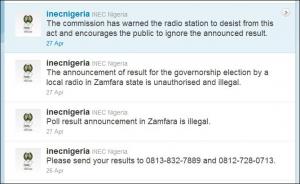
INEC Nigeria Twitter Stream

Here are a few thoughts from our friends on the NDI Elections Team about the utility of Twitter in election monitoring efforts across the globe.

Twitter is a powerful and multidimensional tool. Its marquee value is the aggregation of real-time data that can be exponentially distributed or simply shared with a selected user. Regardless of how it's used, Twitter can be integrated into election monitoring efforts around the world and here are a few ideas from NDI's Elections team that are predicated on the difference former NDI Tech team alumnus Ian Schuler makes between crowdsourcing and citizen reporting. READ MORE »

Tuit-Tuit: Mexican Party Holds Twitter Contest To Improve Governance

The #LogrosPAN hashtag

This is a guest post from Julian Quibell, NDI’s resident senior program manager in Mexico. You can meet Julian on Twitter or Facebook.

Mexican political parties have increasingly used communication and information technologies (ICTs) -- particularly social networks like Facebook and Twitter -- as a low cost means to broadcast information to their members and the broader public. Our team here at NDI in Mexico has been working with all major political parties, in government and the opposition, to adopt new practices that harness the power of these tools not only to inform, but also to consult and mobilize around their causes.

An excellent example of these innovative uses of ICTs can be found in a recent online competition put on by the Outreach Secretariat of the National Action Party (PAN). Born of an idea shared by our team at NDI, the PAN designed an online competition that increased the number of users (followers, fans) on the party's various social media accounts, transmitted thousands of positive messages about PAN achievements over the last decade, and provided the party a broad base of feedback on different issues of public concern (education, the economy, public security, etc.). READ MORE »

Job Post: ICT Program Officer

An experienced veteran of  technology in politics or development? The NDItech team is looking for you!

We are recruiting for a senior position on our team - ICT Program Officer. NDItech program officers juggle the strategy and implementation of appropriate technology on multiple NDI democracy programs concurrently. In one day you may advising DC's regional experts on  inserting language for IVR systems in a grant proposal, joining a Skype call with software developers in a field office working to design a custom app for an upcoming election, and playing with the newest release of FrontlineSMS to see how it might work in NDI's programming.

We also get time to think, write and discuss this exciting field with our counterparts in DC and around the world. For the right candidate, there's a lot of field work involved, assessing what tech is the right fit for new programs or helping with on-the-ground implementation.

For this job we're looking for someone with significant experience (say, five years) in tech for development or politics. If you're a bit newer to the field, you should try for the Program Assistant job discussed below.

To apply, check the Washington-DC based job link in the current openings section of NDI's website. Job description after the jump.

Job Post: ICT Program Assistant

The NDItech team is recruiting a Program Assistant - one of the world's best entry-level jobs for technologists interested in human rights and international affairs.

Our program assistants have a chance to work on the the stratagy, design and implementation of technology to empower NDI's democracy programming around the world. You'll be working on components of several NDI democracy programs concurrently, dealing collaboratively with our team, NDI's DC-based experts, regional field staff and our global partners. You'll also assist with our communications strategy, including blogging (right here!) tweeting and attending tech-related events.

The full job description is below.

To apply, check the Washington-DC based job link in the current openings section of NDI's website.


Job Description:  Program Assistant - ICT Programs

SUMMARY:  Supports ICT Programs team and program teams in the day-to-day activities of planning, designing and implementing projects that integrate appropriate and sustainable technologies into NDI’s global democracy strengthening programs through:

Essential Duties READ MORE »

Syndicate content