
















esummers's blog

News and Notes Roundup: March 16

in
The new and highly secure Blackberry Tablet

It’s Monday, so of course that means it’s time for another NDItech News and Notes Roundup. As we creep towards March Madness and you all begin to fill out your brackets, take a few moments to gain some inspiration from this week's tech and tech4dem links. As always, be sure to check us out on Twitter, Facebook, and our blog site, nditech.org.

This week in tech history, in 1995, the world’s first Wiki, WikiWikiWeb, was created as Ward Cunningham invited people to add and edit content. Cunningham has said the inspiration for the name Wiki came from the Wiki Wiki Shuttle bus he learned of during a trip to Hawaii. Six years later, Wikipedia was launched, although Cunningham had no official involvement. Also this week in tech history, the first internet domain was registered by Symbolics (symbolics.com), a Massachusetts computer company. Since its creation in 1985, symbolics.com has changed owners and is now run by a small inverstor group based in Dallas, Texas. It is the first and oldest registered domain name out of approximately 275,000,000 domain names in existence.

Now, time for the links:

READ MORE »

News and Notes Roundup: March 9

in
The debut of the new Apple Watch is today...

Spring has finally sprung, the snow and ice is melting, and we’re back with another Monday edition of the NDItech News and Notes Roundup. For more great info check us out on Twitter, Facebook, and our new blog site, nditech.org.

This week in Tech History – March 9, 1999 – Vice President Al Gore famously stated to CNN, “During my service in the US Congress, I took the initiative in creating the internet.” Subtract a few words for tidiness or political expediency, and the story that Al Gore claimed to “invent the internet” was launched. In addition to this famous claim and the world’s first telephone call, this week also featured (29 years ago) the first public offering of Microsoft stock on March 13th, 1986.

This week, there is history-in-the-making, as Apple is about to release another product to separate us from our hard-earned money. The Apple Watch is expected to debut today; you can, er, watch the circus on the @macrumourslive Twitter feed.

And now, time for the links:

READ MORE »

News and Notes Roundup: March 2

in
This week marks a big anniversary in the history of the telephone.

The ice is melting, warmer weather is coming (we hope) and the month of March is finally here. And of course, what goes better with the great late-winter thaw than another excellent edition of the NDItech News and Notes Roundup? Nothing - except for a new logo of course! In addition to another set of hot links to keep you going on these cold nights from the worlds of popular tech and tech4dem, this roundup is also the first to be sent out under NDItech’s new logo. If you haven’t seen it yet (which would be kinda hard to do if you’re reading this piece right now), be sure to check out our bold new look on Twitter, Facebook (we just switched pages, so help us pick up some likes), or the blog, which is now at nditech.org.

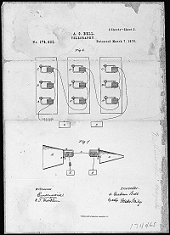
Now that all that self-promotion is over with, we can turn to “This Week in Tech History.” Perhaps the most notably anniversary from this week will occur on March 5th. That day will mark the 10th anniversary of the launch of Yahoo! on the internet. Also of note this week is 139th anniversary (feel free to check my math) of Alexander Graham Bell winning a patent for an “Improvement in Telegraphy” on March 7. This patent - U.S. Number 174,465 - later became known as the variable resistance telephone.

And now, the links: READ MORE »

News and Notes Roundup: Feb. 23

in
Still waiting on our first Oscar win here at NDItech...

For the first time in seemingly forever, we are back with an on-time, regularly scheduled Monday edition of the NDItech News and Notes Roundup. As you debate the merits of last night’s Oscar winners, losers and snubs around the water cooler or in-office kegerator today, feel free to sprinkle in some conversation about the Roundup’s hot links in tech, democracy, and development. And as always, feel free to tweet or email us (@nditech or [email protected]) with any tips.

This week’s look into “Tech History” starts out by acknowledging the February 26th anniversary of the release of the world’s first web browser. WorldWideWeb, later renamed Nexus, was released into the public domain in 1991. We should also mentioned that this Sunday, March 1st marks 39 years since the legendary Steve Wozniak completed the basic design for a circuit board that became the bases of the Apple 1 computer.

Now, time for the links:

Popular Tech News: READ MORE »

News and Notes Roundup: Feb. 18

in
Obligatory Presidents Day photo...

One might assume that with Monday’s holiday and Tuesday’s D.C. “blizzard” the NDItech News and Notes Roundup might’ve just given up on this week. But of course, we all know what assuming does. Not only has the greatest roundup this side of the Potomac persevered through snow day and holiday, but it’s honored America’s Presidents during this holiday week with an extra special edition. As always, feel free to tweet or email us (@nditech/[email protected]) with any hot tips.

As we not so subtly hinted at in this roundup’s opening stanza, this week’s look into “Tech History” will focus on American Presidents. Unfortunately, not that much happened this week in history when it comes to Presidents and tech - so we’ll keep this section short this time around. Perhaps the only noteworthy item to mention is that February 22nd is the anniversary of the first Presidential radio address. On that date in 1924, Calvin Coolidge reached an audience of 5 million listeners with his speech from the White House.

Now, time for the links:

READ MORE »

Discussing Data: Visualizing Nigerian Pre-Election Trends

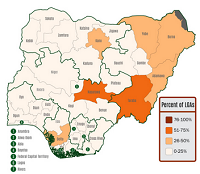
Part of NDI partner TMG's Nigerian pre-election reports, visualizations like this help highlight key trends in the data.

In the lead up to the March 2015 Nigerian elections, NDI partner, the Transition Monitoring Group (TMG), deployed a team of over 750 pre-election observers across each of the country’s local government areas (LGAs). These observers have spent the past few months collecting and submitting short message service (SMS) reports on various indicators of interest. This incoming data can be a lot to digest, so to help make some initial sense of it all, the team has turned to data visualization as a component of their analysis. Here to help explain the pre-election observation (PREO) process and its data visualization component is Ryan Dalton, Senior Program Assistant on NDI’s Nigeria team in D.C.

Q: Could you briefly explain the pre-election observation efforts in Nigeria? READ MORE »

News and Notes Roundup: Feb. 10

in
What does the new Ubuntu phone really mean for open source?

Definitely a day late and more than likely a dollar short, we’re back with another edition of the literary masterpiece known as the NDItech News and Notes Roundup. Since we are already running tardy, we’ll spare you the usual loquatious introduction and jump right into the good stuff. As always, feel free to tweet or email us (@nditech/[email protected]) with any hot tips.

We will keep this roundup’s look back into “Tech History” short and sweet. Although many interesting tech-related anniversaries (such as the first long distance telephone call!) take place this Valentine’s week, perhaps none has had more of a recent impact than the launch of YouTube. Exactly 10 years ago this week (February 15th to be exact), the world’s 3rd most popular website (trailing only Google and Facebook) began its re-invention of the way we view, share, and talk about videos.

Now, time for the links:

READ MORE »

News and Notes Roundup: Feb. 2

in
Truth be told, this week is the 80th anniversary of the polygraph machine.

As everyone recovers from the Katy Perry overloaded, beer/car/insurance-commercial dominated and last-second intercepted (sorry Seattle fans) pseudo-holiday that was last night’s Super Bowl, we can’t think of a better recipe to have us all feeling better than another edition of the magnificent NDItech News and Notes Roundup. As you take a read through these notes and quotes from the fields of tech, democracy, and development, feel free (as always) to tweet or email us (@nditech/[email protected]) with any hot tips.

We begin this week’s look back into “Tech History” by marking the 80th anniversary of the first use of the polygraph machine. The reputation of the machine’s accuracy has certainly taken some hits over the years, but its existence can at least be credited with inspiring one of the best scenes (profanity laced - please be advised) from perhaps television’s all-time greatest show. We also celebrate the birthday of the world’s most influential social network this week - 11 years after the birth of thefacebook on Feb. 4, 2004. And we must mention the 15th anniversary (also on February 4th) of the release of the best-selling P.C. game in history. That game, of course, is The Sims. Perfect for all of us who want to while away our life playing a game about a life that is probably more boring than the one we actually live.

Now, time for the links:

READ MORE »

News and Notes Roundup: Jan. 26

in
It's Super Bowl week...

The time has come for a Super Bowl week edition of the NDItech News and Notes Roundup. While blizzards blitz the Northeast and America begins to warm-up for its unofficial football-inspired holiday, we’ve been busy catching up on the latest news, notes, and quotes from the fields of tech, democracy, and development. As always, don’t just sit on the sidelines - feel free to tweet or email us (@nditech/[email protected]) with any tips for future roundups or if you think anything in this roundup is unsportsmanlike or worth of being flagged.

We kick off (football pun fully intended) this week’s look back into “Tech History” with perhaps the most famous inventor of all time - Thomas Edison. Almost 135 years ago, on January 27th of 1885, Edison patented the incandescent lamp. Sticking to the theme of firsts (and first downs, if you will), January 27th is also known as the day in 2010 when we all got our first look at the iPad. Given how widespread the iPad is today, it’s hard to believe it has been just 5 years since its rookie season. And of course we can’t mention firsts without highlighting ‘Elk Cloner’, oft-recognized as the first PC virus code, which was written on January 30th, 1982.

Now, time for the links: READ MORE »

News and Notes Roundup: Jan. 20

in
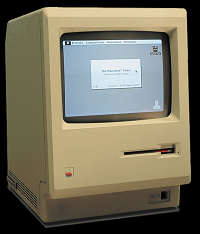
Apple launched the Macintosh personal computer this week in 1984

It’s Tuesday, which is practically a Monday, which means it’s time for the NDItech News and Notes Roundup.. We hope you all had a restful and reflective MLK day on Monday, and are ready to start this work week off right by reading this roundup. As always, tweet or email (@nditech/[email protected]) with any tips for future roundups.

We kick off this week’s look back into “Tech History” with the January 19, 1999 introduction of the BlackBerry - the first device capable of real-time email. Although the BlackBerry has certainly been influential, it was another product introduction 15 years prior that had an even more lasting impact. On January 20, 1984, during the third quarter of Super Bowl XVIII, Apple aired it’s famous ‘1984’ commercial introducing the Macintosh. The Macintosh, although prohibitively expensive for many, became the first mass-market personal computer with a mouse and graphical UI. Of course, when talking about influential products and inventions, we have to give a shout-out to a product that has revolutionized countless kitchens and influenced innumerable meals - the microwave oven. The patent for this appliance was issued 65 years ago this week. READ MORE »

News and Notes Roundup: Jan. 12

in
Wikipedia went online 14 years ago this week.

It’s Monday. We’re back. Time for this week’s dose of the NDItech News and Notes Roundup. As always, tweet or email (@nditech/[email protected]) with any tips for future roundups.

We’ll start this week’s look back into “Tech History” with a shout-out to the first flight of the legendary Boeing 747, the world’s original jumbo jet, which took place on January 12th, 1970. Of course before the commercial airliner came the mass-produced automobile, the first of which (Ford’s Model-T) began assembly-line production 101 years ago this Wednesday. Also of note this week: the birth of “911” as an emergency telephone number in 1968; Wikipedia going online for the first time on Jan. 15, 2001; and the 20th anniversary of the registration of Yahoo dot com (originally named “David and Jerry’s Guide to the World Wide Web” !!!) on the 18th of this month.

Now, time for the links:

Popular Tech News: READ MORE »

News and Notes Roundup: Jan. 6

in
The Morse telegraph system helped revolutionize long-distance communication.

Welcome to the first NDItech News and Notes Roundup of 2015. Although it may seem weird to our usual crowd that we’re posting this Monday tradition on a Tuesday, we promise that this week’s roundup is worth the wait. As always, tweet or email (@nditech/[email protected]) with any tips for future roundups.

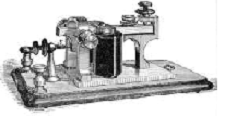
This week’s “Tech History” begins way back on January 6th of 1838, the day when Samuel Morse first demonstrated his telegraph system, beginning a revolution in the world of long-distance communication. Many years later, another communications revolution of sorts began when Steve Jobs introduced the Phone on January 9th, 2007. This announcement came exactly six years after Jobs introduced another game-changing platform - iTunes.

Now, time for the links:

Popular Tech News:

  • Web blocking by Indian government causes anger

News and Notes Roundup: Dec. 29

in
It's been 15 years since Y2K.

The days, weeks, and months have passed. The seasons have turned. The New Year is on our doorstep, and with it the final NDItech News and Notes Roundup of the old year. While 2015 holds much promise - highlighted undoubtedly by the continued meteoric rise of this weekly roundup tradition - we must look back at 2014’s final week before we look forward. As always, tweet or email (@nditech/[email protected]) with any tips for future roundups.

We’d be remiss if we didn’t start this week’s “Tech History” feature with a shoutout to the great New Year’s panic of December 31, 1999. Of course, we are referring to the “crisis” of Y2K. And although Y2K came and went with few of the problems anxiously predicted, it certainly left a legacy. Fifteen years prior, on Jan. 1, 1985, the internet’s domain name system was created. Just two years before that, in 1983, ARPANET began officially using Internet Protocol, and in doing so created the seed that would become the modern internet.

Now, time for the links:

READ MORE »

News and Notes Roundup: Dec. 22

in
What goes better together than the holiday season and the movies?

Time for a festive Christmas-time edition of the NDItech News and Notes Roundup. In a holiday season often consumed by empty offices, slow work weeks, and travel delays, hopefully this edition of our roundup can help you fill some of that down time. As always, tweet or email (@nditech/[email protected]) with any tips for future roundups.

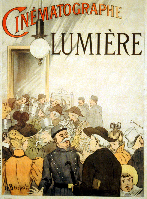
Unsurprisingly, this week’s “Tech History” feature has a decidedly holiday feel to it - beginning with December 22nd’s 132nd anniversary of the first electric Christmas tree lights. Sticking with the holiday theme, Christmas day in 1987 witnessed the world’s first “widely disruptive computer worm.” The bug, cleverly named CHRISTMA EXEC, affected IBM mainframe computers across the globe. And going back to another piece of 19th century greatness, the world-renowned Parisian frères Lumière debuted their Cinématographe during the world’s first projected movie screening on December 28th, 1895.

Now, time for the links:

READ MORE »

News and Notes Roundup: Dec. 15

in
The Wright Brothers first flight took place 111 years ago this week.

Another weekend has come and gone and that wonderful Monday tradition is upon us. That’s right, it’s time for another edition of the NDItech News and Notes Roundup. As always, please tweet or email (@nditech/[email protected]) with any hot tips for future roundups.

Before we move on to the links, let’s take a look at “This Week in Tech History.” Ten years ago to the day, on December 15, 1994, the first commercially developed web browser, Netscape Navigator 1.0, was released. Exactly one year later, the world saw the launch of AltaVista, which became the first world wide web search service to gain popularity. And of course we should mention that one of technology’s crowning achievements, the Wright Brothers’ first powered flight, took place on December 17, 1903.

Now, time for the links:

READ MORE »

News and Notes Roundup: Dec. 8

in
It's a big week in the history of the computer mouse

It’s Monday, you know the drill. Time for another edition of the NDItech News and Notes Roundup. As always, please tweet or email (@nditech/[email protected]) - with any hot tips for future roundups.

This is a very special “Week in Tech History”. On December 8, 1975, the Byte Shop opened its doors as one of the first retail computer stores in the world back when it was the ultimate geek hobby. Just under a year later, Byte Shop ordered the first 50 computers from the struggling Apple Computer company. The rest, as they say, is history. Not to be outdone by the 8th, December’s 9th day will forever be remembered for the first public demonstration of the computer mouse which caught the public’s eye in 1968, when Douglas Englebert highlighted the invention to a crowd of about 1000 computer professionals.

And now, time for the links:

READ MORE »

News and Notes Roundup: Dec. 1

in
Girl Scout cookies have changed the online shopping game forever.


Thanksgiving has come and gone. The weekend is over. The turkey (or tofurkey) is eaten. A full work week is back with a vengeance. But amid all these post-holiday Monday negatives, we’ve got something to make you feel just a bit better: another issue of the critically acclaimed (why not?) NDItech News and Notes Roundup. As always, please tweet at us - @nditech - or email us - [email protected] - with any comments or suggestions for future roundups.


For “this Week in Tech History," we focus on December 1, 1996. On that day, AOL launched a new subscription plan offering its subscribers unlimited dial-up internet access for just under 20 bucks a month. The plan enticed over 1 million news customers, and average usage rates soared to over 32 minuted per day. Of course, this new demand did overload AOL's servers, leading to a bevy of complaints.


And now, time for the links:


READ MORE »

Giving Thanks

We all have a lot to be thankful for.

We’ve got it pretty good, overall, and last week's gluttonous binge/contemplative holiday was an opportunity to think a bit about all the things for which we’re thankful. Here are a few thoughts from our team on what we are grateful for these days.

First and foremost, of course, is you our dear readers. (Hi mom!)

Chris Doten

African tech hubs. I just got back from ccHub and the Idea Hub in Lagos, and they’re fantastic exemplars of this great phenomenon. Pulling smart young techies together where they can learn and grow - and in an environment that is often focused on social good. They’re pragmatic, too - the same sort of reduction of cost barriers to entry you get with coworking spaces here in the US. Made even more valuable by supply of fast internet and generator power.

A declining Ebola transmission rate. I have a lot of love for Liberia and have been heartbroken by the outbreak. The fact that things have been slowing - while far from over - is better than the nightmare exponential growth scenarios we were facing. Might have had something to do with the tech response coordinated by USAID. READ MORE »

Tunisia Presidential Election Observation WordChart

The above wordchart is taken from the comments and responses of International Election Observers during Tunisia's recent presidential election. The content is directly culled from the mobile forms that the observers filled out on tablets using Formhub and ODK collect.

Tablets in Tunisia: Transforming Election Day Data Collection

Election observers test out the tablets.

In NDI’s 30 years of existence, the Institute has observed more than 200 elections around the world. The Institute’s international election observation missions draw on a network of senior experts and politicians from around the globe as observers and examine all phases of the election processes. On election day, observers visit polling stations to witness the voting process and report findings to the mission’s headquarters in the capital city, where they are analyzed and incorporated into the mission’s preliminary statement on the election. With the advent of new mobile technologies, the process for transmitting observers’ findings on election day is starting to shift.

To take a deeper look at how NDI is using ICTs to streamline the election day data collection process, we sat down with NDI-Tunisia’s Resident Program Manager for Elections, Nicholas Collins. Nicholas recently managed NDI’s missions to observe the October 26 legislative elections and November 23 first-round presidential election in Tunisia, and is leading preparations to observe the run-off presidential election anticipated in December. He was kind enough to take some time out of his busy schedule to chat:

Q: What is the typical process of collecting data and information during an international observation mission (IOM)?

READ MORE »

News and Notes Roundup: Nov. 24

in
The first batch of Polaroid Cameras, released in 1948, sold out in less than a day.


It’s Monday again. That means we have another batch of links for the NDItech News and Notes Roundup. Once again, we’ve organized things into three categories: Popular Tech News, ICT and Development, and Mobiles. As always, please tweet at us - @nditech - or email us - [email protected] - with any comments or suggestions for future roundups.


Before we get to the links, we should take some time to reflect on the past with This Week in Tech History. On November 24, 1859, Chuck Darwin published his explanation of evolution in “On the Origin of Species”. And of course who could forget November 28, 1948, the day when the first Polaroid Instant Camera was sold.


And now, time for the links:


READ MORE »

News and Notes Roundup: Nov. 17

in
Windows 1 was released 29 years ago this week


Happy Monday! Once again we have another batch of links for the NDItech News and Notes Roundup. This week, we’ve organized things into three categories: Popular Tech News, ICT and Development, and Mobiles. As always, please tweet at us - @nditech - or email us - [email protected] - with any comments or suggestions for future roundups.


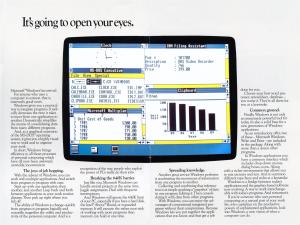
Before we get to the links, it’s time for the second edition of This Week in Tech History. On November 17, 1970, the Soviet Union landed an unmanned, remote-controlled vehicle on the moon. Fifteen years and three days later, on November 20, 1985, the first version of the legendary Microsoft Windows operating system - Windows 1.0 - was released.


And now, time for the links:

READ MORE »

A Day for Digital Security

Encryption dominated much of the discussion at the conference


Last week I took a Friday trip to the Knight Conference Center at the Newseum for a day focused on the present state of digital security as it relates to surveillance and the news media. The Freedom of the Press Foundation, Open Technology Institute, and Reporters Committee for Freedom of the Press co-hosted the “News Organizations and Digital Security: Solutions to Surveillance Post-Snowden” event, which drew a capacity crowd of technologists, journalists, media development professionals, and a few folks like me who work in the #Tech4dem space.

The star of the event turned out to be none other than Mr. Edward Snowden himself. After the conclusion of the day’s final panel - fittingly a discussion on “Security Lessons from the Snowden Files” - Snowden appeared for a brief Google Hangout with the audience. Like many of the panelists before him, Snowden called for a “change in attitudes towards digital security.” The (in)famous whistleblower stressed the importance, as he did during the initial release of the NSA documents, for a wider social and policy discussion on issues of digital security, surveillance, and potential regulation. After he wrapped up, the crowd took a trip to E Street Cinema for a screening of CitizenFour, a recently released documentary film tracking Snowden during the days leading up to and the months following the NSA leaks.

READ MORE »

News and Notes Roundup: Nov. 10

in
It's an important day in the history of the phone...


Happy Monday! Nothing brightens up the start of a new week quite like a fresh edition of the NDItech News and Notes Roundup. Below is another batch of links from the worlds of popular tech, ICT, and tech4democracy. Tweet at us - @nditech - or email us - [email protected] - with any comments or suggestions for future roundups.


Before we get to the links, let’s take a moment to reflect on just how far we’ve come in a new segment for the roundup: This Week in Tech History. On November 10, 1951, direct-dial, coast-to-coast telephone service began with a call between the mayors of Englewood, N.J., and Alameda, Calif.


And now, the links:

READ MORE »

Discussing The Issues: ePramova in Belarus

ePramova Candidate Videos


Based on the Issues DemTool developed by NDI, ePramova is an online video platform launched earlier this year in Belarus aimed at fostering questions, answers, and public discussion on important political issues.  We chatted with Michael Murphy, Belarus Director, and Juri Jurkevits, Program Officer responsible for working with ePramova, about their observations of the platform so far. We’ve synthesized their thoughts into a short Q&A writeup below. If you have further questions about ePramova itself or the Issues DemTool platform more generally, contact us at [email protected].


Q: How was the platform introduced, and how was it accepted?

READ MORE »

Syndicate content