Organizational Development

NDItech's March Towards Resilience - Lessons From Supply Chain Industry

At NDItech, we build innovative software products, consult with the regional teams to solve program needs through mobile and web based solutions, and innovate in the Tech4Dem space with breakthrough ideas and partnerships. In the face of multiple customers, diverse products, and evolving challenges, the NDItech team aims for resilience:  tolerate variability, adapt continuously, and maximize opportunities.

I recently came across a great piece titled “From Risk Management to Resilience” on Sloan Management Review. The article discussed the Supply Chain Resilience Assessment and Management (SCRAM) methodology. SCRAM involves identifying vulnerabilities in an organization and developing and strengthening capabilities to mitigate the vulnerabilities and thus improving resilience.

In this short blog, I attempt to list the key vulnerabilities of the NDItech team and map them to capabilities that we have developed and/or developing to address those vulnerabilities.

Our nine member Scrum team works across the gamut of topics and operates at capacity with very little buffer for additional demands. Our key vulnerabilities are the following; READ MORE »

Viral Messaging in Nigeria

Supporter holding a #VoteNotFight sign

Nigerian non-profit Vote Not Fight has a compelling mission and a persuasive message. Their work: to empower youth to participate in Nigeria's elections and eschew election violence. Nigeria has a huge youth bulge who are disproportionately unemployed, and they are often the focus of groups looking to stir election violence for partisan political gains. READ MORE »

Under the Guidance of Apollo

Apollo

Readers here will be intimately familiar with the Elections Data Management tool, otherwise called Apollo, a name that I have realized will come to stay, despite the better messaging strategy pursued by the ICT team. Apollo will keep this name because of its almost mythical appearance in the midst of elections.  The Greek god Apollo was known as the god of light and truth, of prophecy, and healing. Much like the actual Apollo, the elections Apollo is made manifest from the ether to give meaning and direction to an otherwise amorphous and senseless deluge of information during a PVT. Information that is critical to the validation of an election, information with the ability, to stretch a metaphor, to heal, move, and transform societies. Apollo is pulled from the abyss of Github, thrown up on an Amazon server, deployed in the course of an hour, and reconstructed and refit for the needs of a unique observation mission within several days by the near herculean efforts of  NDI’s beloved Python developer, Tim Akinbo of TimbaObjects. However, the product life cycle of this tool may well need heavenly intervention to continue its current course of development. READ MORE »

Online Organizing Platforms

@SenWarren opens #RootsCamp13

Our last RootsCamp ‘13 round-up identified free tools to maximize voice, and to collect and analyze social and mobile data. Each tool was quite specific in its purpose and execution. Beyond these, the attendees (vendors and activists alike) discussed a broader set of platforms (suites) that attempt to manage people and data in a way that allow for a variety of campaign and advocacy activities including petitions, member engagement, mobilization, etc.  As before, find a round-up of the best-of-breed at the conference below. Send any of your own suggestions, and we'll update the list.

Campaign Management

NGP VAN is the largest provider of political data management tools for progressives in the US. With it’s recent purchase of NationalField, which builds tools for managing field staff and volunteers, they provide an integrated platform of fundraising, organizing, new media, and social networking products.

NationBuilder is billed as “Political campaign software starting at $19/mo”, NationBuilder has developed an impressive set of online tools for campaigns including websites, voter databases, fundraising tools, and communications tools. Nationbuilder is looking to internationalize its platform. READ MORE »

Mobile Data on the Go: How to Use FormHub and ODK in 5 Easy Steps

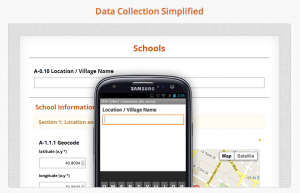
Data Collection Gone Mobile - Image Courtesy FormHub

One of the key components to any well run organization is an efficient process for information gathering. This can seem a daunting task for professionals working from differing locations or even transnationally. Traditionally, organizations have relied on paper forms for collecting data only to later gather the forms and enter them manually into a database for analysis. Using web-based forms allows for real-time monitoring and analysis of data. Mobile collection of data also offers the ability to collect advanced data such as GPS coordinates, images, videos, and time stamp data - all on the go and in the field.  

The best part of using mobile-forms is that you don’t have to be a programmer or statistician to utilize them. Building web-forms is a fast, uncomplicated task that can be executed by even the least tech-savvy individuals.  In order to prove this, over the last week I have been working with two tools that are increasingly popular for mobile data collection: Formhub and Open Data Kit (ODK). Below is an easy 5-step breakdown for using Formhub and ODK Collect to enhance your data collection process.

READ MORE »

Blurring the Boundaries for the Common Good

CitizenLab Sponsored the 2013 Connaught Summer Institute at the University of Toronto

Never doubt that a small group of thoughtful, committed citizens can change the world; indeed, it's the only thing that ever has. ~ Margaret Mead

For the last week I have been holed up with approximately 60 computer scientists, activists, and social scientists from around the world at the Connaught Summer Institute hosted by CitizenLab at the University of Toronto. The individuals gathered here are some of the top minds in monitoring internet openness and rights. For the last 5 days, each of us has either presented a paper, case studies, or posters on issues most people never think about, but should.

We have engaged one another in a cross-disciplinary give and take. The problem this institute seeks to address, as identified by the CitizenLab, is a lack of dialogue occurring between academic disciplines and with academia and activists on the ground. The entire goal, as it has become apparent, is to begin the process of blurring the boundaries between the disciplines and with activists. READ MORE »

Tips and Tools - NOI's Organizer’s Toolbox

The New Organizing Institute (NOI) is a community of organizers dedicated to supporting the organizing efforts of citizens by training organizers to build and manage effective movements. The NOI’s online Organizer’s Toolbox provides the basic tools, technologies, and strategies to help community organizers to build movements and achieve real change. According to the NOI's mission statement:

If people have the tools to engage others, the tools to build powerful campaigns, and a community of practice to help them learn and grow, they can win real change, make measurable improvements in people’s lives, and restore faith in our government and our democracy.

This is true not only for community organizing efforts in the U.S., where the NOI is focused, but also international efforts such as those supported by NDI and its partners. The toolbox hosts ten Resource Centers that support various aspects of campaign organization, including online organizing, organization and leadership, data management, voter registration and Get Out the Vote (GOTV) initiatives. From tips on public speaking to registering voters to engaging online, the toolbox covers a variety of the elements essential to community organizing.  It also contains a module designed specifically for campaign trainers, which can support programs that include a training-of-trainers component.


Photo credit: New Organizing Institute

Here at NDItech, we are always on the lookout for relevant resources that can support the efforts of NDI and its partners in the field. This online Toolbox is an excellent public resource for organizations that support movements worldwide to develop their message, engage effectively, and affect real change in their societies. By sharing past experiences, best practices, and key tactics and tools, resources such as this online toolbox can support effective community organizing and democracy-building efforts around the world.  

READ MORE »

Tech for Elections: Grounded Processes and Smart Tools

Get 'em in a row.

Often discussions of technology for (fill in the blank here) get confused about tools, techniques and processes.  This is especially true when the discussion turns to crowdsourcing, a technique where a group of individuals voluntarily undertake a task. In an electoral context, crowdsourcing often emphasizes participation over systematic evaluation. The use of online maps (a tool) emphasizes analysis and story-telling based on geographically relevant conclusions, at the expense of other analytical frameworks. 

Instead of tools and techniques driving strategic decision-making, it’s important to identify intended outcomes and the processes supporting those outcomes. 

In a recent NDI "ElecTech" workshop in Nairobi, we posed that any use of tech in elections should have as the primary outcome the ability to assess and evaluate the electoral process. We think it is helpful to think about four specific processes, a series of actions taken to achieve an end, where technology can significant impact the achievement of these outcomes.

These include: Organizational Structures, Data Collection, Telling a Story and Outreach. Let's focus on organizational structures first. 

Organizational Structures: Having Your Ducks in a Row READ MORE »

9 Things We Should be Doing to Leverage Cloud Computing

While cloud adoption is fairly widespread in the US and many more developed economies, the path to the cloud is just beginning for many organizations and IT service providers in less developed countries around the world. Preparing now can help make the path to the cloud easier and help groups to start to benefit from cloud technologies today.

NDI and other International development organizations that provide IT or ICT services should be preparing their partners around the world for cloud computing. Here are nine things that we should be doing now:

  1. Use software as a service (SaaS) whenever possible. Small organizations should avoid building internal infrastructures and managing services however small, and instead subscribe to these services hosted in the cloud.

If You Build It Will They Come?

I had the opportunity to spend a few days in Pristina at the end of June to assess the viability of a planned legislative document management system for the Kosovo Assembly. NDI plans to help, but we needed to be sure the project was on a successful track and see how we could best assist.

Why the cautious approach?

In 2004, five years after the conflict ended in Kosovo, one of the big international organizations correctly identified the need to modernize the legislature. Funds were allocated and plans were drawn up for a DMS (document management system), a bill tracking and legislative document tracking system - a necessity for modern legislatures. However, in spite of best intentions and significant financial investment, the system was deployed but never adopted by the Assembly and now lies dormant as the staff continue to manage legislative business manually - paper, copy machines, re-keying documents, etc. READ MORE »

Political Parties: Proven Tool for Political Change

One set of institutions that are particularly well suited to channeling civic desire for change into positive political action but are often overlooked in international circles are political parties. Relatively little attention is paid to the important role parties play in aggregating citizen interests and channeling them into constructive and peaceful means toward democratic reform.

Therefore, an area of opportunity with tremendous potential in countries where NDI works is to provide more technology assistance to parties, especially in autocratic states (assuming parties are allowed!) where the regime often has access to considerable state resources and controls the major organs of state communication.

Three important areas of political party development that our team (in partnership with our excellent Political Parties team) have identified that show promise and impact include: READ MORE »

Syndicate content