
sganesan's blog

Does "Smart" Make Sense?

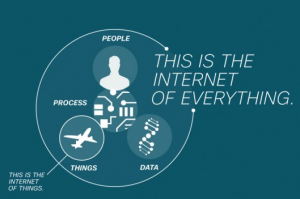
Source : Cisco Smart Cities

If you are reading this blog, I bet you have attended an event in the recent past where the new buzzy topic “Smart Cities” was discussed. I have been to several such events lately. Interestingly, each mention of ‘smart city’ I heard carried a slightly different meaning. Further, there is seldom an answer to the question, “To what end are the cities smart?”. So I decided to to clarify “smart cities” for myself. Here are some of my thoughts. READ MORE »

6 Steps For Designing A Product With The User

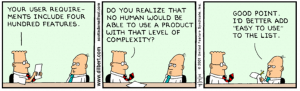
Feature Overload - Source: Dilbert

As you all know by now, we're big proponents of the Principles of Digital Development. One of them is "Designing with the User" which suggests the following six steps:

  1. Developing context-appropriate solutions informed by user needs.

  2. Including all user groups in planning, development, implementation and assessment.

  3. Developing projects in an incremental and iterative manner.

  4. Designing solutions that learn from and enhance existing workflows and plans for organizational adaptation.

  5. Ensuring that solutions are sensitive to, and useful for, the most marginalized poulations: women, children, those with disabilities, and those affected by conflict and disaster.

NDItech's March Towards Resilience - Lessons From Supply Chain Industry

At NDItech, we build innovative software products, consult with the regional teams to solve program needs through mobile and web based solutions, and innovate in the Tech4Dem space with breakthrough ideas and partnerships. In the face of multiple customers, diverse products, and evolving challenges, the NDItech team aims for resilience:  tolerate variability, adapt continuously, and maximize opportunities.

I recently came across a great piece titled “From Risk Management to Resilience” on Sloan Management Review. The article discussed the Supply Chain Resilience Assessment and Management (SCRAM) methodology. SCRAM involves identifying vulnerabilities in an organization and developing and strengthening capabilities to mitigate the vulnerabilities and thus improving resilience.

In this short blog, I attempt to list the key vulnerabilities of the NDItech team and map them to capabilities that we have developed and/or developing to address those vulnerabilities.

Our nine member Scrum team works across the gamut of topics and operates at capacity with very little buffer for additional demands. Our key vulnerabilities are the following; READ MORE »

NDItech - Product Development Process

© Dilbert Project Management

This is the first in a series of posts on the NDItech team’s product development process. NDI’s tech products attempt to solve specific problems for people and organizations in emerging democracies. In this post, will look at the example of DemTools development to get an insight into our development process. More about DemTools can be found here.

For the last six months, our team has been following follow the scrum methodology, which is an agile software development framework, for the development and evolution of DemTools. Agile methodology allows us to be flexible, prioritize tasks, and respond to the evolving requirements of our customers.

We wanted to share a bit about how we’re using this agile methodology for developing tech-powered political change programs here at NDI. In this post we’ll tell you how we relate to people and programs, how we think about requirements, and the timelines for our sprints, and the tools we use to glue it all together.

Customers

For the purpose of development of DemTools, the primary customers are the country teams at NDI. The country teams in turn help political parties and civil society organizations in their respective countries use and benefit from NDI’s technology efforts, such as DemTools. READ MORE »

Syndicate content